Standards :
ASTM A335, and ASME SA335


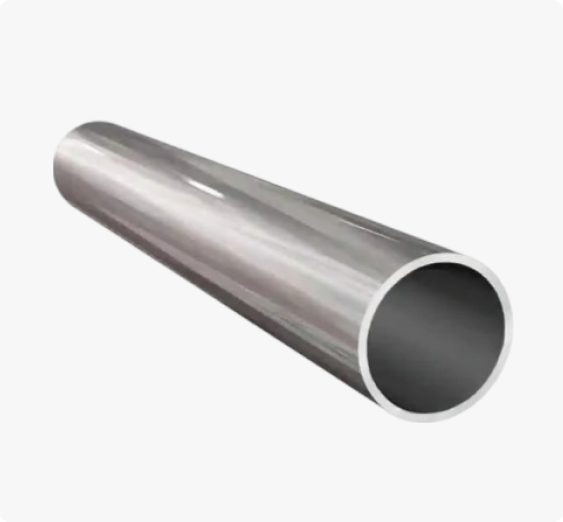
Standards :
ASTM A335, and ASME SA335
Grades :
P9 chromium-molybdenum.
Forms :
Supplied in pipes, tubes, and round sections.
Types :
Seamless, ERW, welded, and EFW variants.


Steel P9 Pipes are engineered for demanding industrial environments where elevated temperatures, high internal pressures, and long-term mechanical stability are critical to safe operation. Manufactured primarily to ASTM A335 Grade P9 and ASME SA335 P9 specifications, these chromium-molybdenum (9Cr-1Mo) alloy steel pipes are widely specified for high-temperature service in power generation, refineries, petrochemical processing, and industrial steam systems. Their alloy composition provides excellent oxidation resistance, creep strength, and structural stability during prolonged thermal exposure.
For engineers, EPC contractors, and procurement professionals, selecting the appropriate Steel P9 Pipes involves more than comparing material grades. Operating temperature, design pressure, corrosion environment, fabrication requirements, and applicable engineering standards all influence material selection and long-term system performance.
Why Choose Steel P9 Pipes?
Steel P9 Pipes are specifically developed for applications operating under sustained high-temperature conditions. Their chromium and molybdenum alloying elements improve oxidation resistance while maintaining excellent mechanical strength during continuous thermal service. Compared with conventional carbon steel pipes, P9 material provides significantly greater resistance to thermal fatigue, creep deformation, and high-temperature scaling, making it suitable for critical industrial process piping.
These characteristics enable dependable operation in steam lines, superheaters, reheaters, heat exchangers, pressure vessels, and high-temperature process systems where operational reliability is essential.
Available Steel P9 Pipe Types
Steel P9 Pipes are supplied in a comprehensive range of configurations to accommodate diverse engineering applications, including:
Products are available in multiple nominal pipe sizes, wall thicknesses, schedules, end preparations, and surface finishes, enabling compliance with project-specific engineering specifications.
Steel P9 Pipes vs P11 and P22 Pipes
Selecting the appropriate chromium-molybdenum alloy depends on the operating conditions of the piping system.
Material selection should always be based on design temperature, operating pressure, corrosion conditions, applicable codes, and the expected service life rather than material cost alone.
Industrial Applications
Steel P9 Pipes are extensively specified across industries operating under demanding thermal and mechanical conditions, including:
Their ability to maintain mechanical integrity during prolonged exposure to elevated temperatures makes them particularly suitable for critical industrial infrastructure.
International Standards
Steel P9 Pipes are commonly manufactured in accordance with internationally recognised specifications, including:
Compliance with these standards helps ensure dimensional accuracy, pressure integrity, material consistency, and dependable performance in high-temperature process piping.
Quality Assurance and Inspection
To ensure compliance with international engineering requirements, Steel P9 Pipes typically undergo comprehensive quality verification, including:
These inspection procedures confirm conformity with project specifications while supporting complete material traceability.
Factors to Consider Before Purchasing Steel P9 Pipes
The selection of Steel P9 Pipes should be based on a systematic engineering evaluation of:
Considering these technical parameters helps ensure the selected piping solution delivers reliable long-term performance while satisfying project-specific engineering requirements.
Why Choose KVN Steels?
KVN Steels supplies high-quality Steel P9 Pipes manufactured in accordance with internationally recognised ASTM and ASME specifications. Our product portfolio supports EPC contractors, industrial manufacturers, refineries, power generation facilities, and petrochemical projects with technically compliant piping solutions, comprehensive quality documentation, and dependable delivery schedules.
Whether your project requires seamless or welded Steel P9 Pipes, our technical team can assist with material selection, sizing, specifications, and inspection requirements to help you procure the most appropriate solution for demanding high-temperature industrial applications.
| STANDARD | Werkstoff /DIN | UNS | EN |
|---|---|---|---|
| A335 Grade P9 | 1.7386 | S50400 | X11CrMo9-1 |
Alloy Steel P9 Seamless Pipes
Manufactured for high-temperature and pressure applications requiring superior strength, durability, and reliable thermal performance.
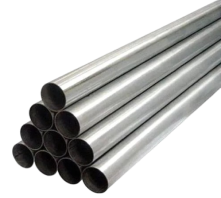
Chrome Moly P9 Seamless Pipes
Chromium-molybdenum alloy pipes offering enhanced heat resistance, oxidation control, and long operational service life.
Alloy Steel P9 High Pressure Pipes
Engineered to withstand extreme pressure and thermal stress in boilers, power plants, and refinery systems.
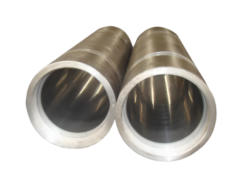
Standards :
ASTM A335, and ASME SA335
Grades :
P9 chromium-molybdenum.
Forms :
Supplied in pipes, tubes, and round sections.
Types :
Seamless, ERW, welded, and EFW variants.
Schedules :
Available in SCH 10, SCH 40, SCH 80, SCH 160, XS, and XXS.
Dimensions :
Produced in multiple diameters and wall thicknesses to meet project requirements.
Temperature Resistance :
Engineered for elevated-temperature and pressure-intensive operations.
Mechanical Strength :
Provides high creep strength and long-term structural stability.
Corrosion Resistance :
Resistant to oxidation and scaling in harsh industrial environments.
Applications :
Widely used in boilers, power plants, refineries, and petrochemical systems.
End Finish :
Supplied with plain, beveled, or threaded ends for installation flexibility.
Inspection Reports :
Delivered with MTC, chemical, mechanical, and third-party inspection documentation.
Packaging :
Securely packed in bundles or wooden crates for safe global transportation.
Chemical Composition of Alloy Steel P9 Seamless Pipes And Tubes
| Grade | C | Mn | P | S | Si | Cr | Mo |
|---|---|---|---|---|---|---|---|
| P9 | 0.15 max | 0.30-0.60 | 0.025 | 0.025 | 0.25-1.00 | 8.00-10.00 | 0.90-1.10 |
Mechanical Properties Of ASME SA335 Alloy Steel P9 Pipe
| Grade | Tensile Strength, MPa | Yield Strength, MPa | Elongation, % |
|---|---|---|---|
| P9 | 380 min | 205 min | 30 min |
Our Alloy Steel P9 Pipes Supplier are used in a wide range of applications and various industries. Below are a few of them:

Application Industries

Aerospace Industry

Food Processing Industry

Pulp & Paper Indusry

Energy Industry

Pharmaceuticals Industry

Power Plant Industry

Chemical Industry

Oil and Gas Industry
Get clear answers to common queries about our steel products, services, and delivery processes.

Steel P9 Pipes are specifically engineered for high-temperature and high-pressure service where long-term mechanical stability is essential. Their chromium-molybdenum alloy composition provides excellent resistance to oxidation, creep, and thermal fatigue, making them a dependable choice for power plants, refineries, petrochemical facilities, and industrial process piping operating under demanding service conditions.
Selecting the appropriate Steel P9 Pipe requires evaluating the operating temperature, design pressure, process fluid, pipe dimensions, wall thickness, applicable ASTM or ASME specifications, and fabrication requirements. Choosing the correct specification helps ensure reliable system performance, regulatory compliance, and an extended operational service life.
Steel P9 Pipes are available in seamless and welded configurations, together with a variety of sizes, schedules, wall thicknesses, and end preparations. Depending on project requirements, they can also be supplied for boilers, superheaters, reheaters, heat exchangers, pressure piping, and custom-engineered applications manufactured in accordance with recognised international standards.
Steel P9 Pipes provide greater high-temperature oxidation resistance than P11 Pipes and are well suited to elevated-temperature process systems. P22 Pipes generally offer higher creep strength for more severe thermal service. The appropriate material should always be selected according to the operating temperature, pressure, process conditions, and applicable engineering specifications rather than price alone.
Steel P9 Pipes are extensively procured for oil and gas processing, petrochemical plants, thermal and combined-cycle power stations, refineries, chemical manufacturing, fertiliser production, boiler installations, heat exchanger systems, pressure vessels, and industrial steam distribution networks where reliable high-temperature performance is essential.
Steel P9 Pipes are commonly manufactured in accordance with ASTM A335 Grade P9 and ASME SA335 Grade P9 specifications. Compliance with these internationally recognised standards helps ensure dimensional accuracy, material consistency, pressure integrity, and dependable performance in high-temperature industrial applications.
Before supply, Steel P9 Pipes should undergo comprehensive quality verification, including Positive Material Identification (PMI), Hydrostatic Pressure Testing, Ultrasonic Testing (UT), chemical composition analysis, mechanical property evaluation, dimensional inspection, visual examination, and complete material traceability supported by Mill Test Certificates (EN 10204 3.1). These inspections help verify compliance with project specifications and international quality standards.
When selecting a Steel P9 Pipe supplier, consider product compliance with ASTM and ASME standards, manufacturing capability, inspection procedures, quality documentation, inventory availability, technical support, and delivery performance. Working with an experienced supplier helps reduce procurement risks and ensures the supplied material satisfies the technical requirements of the project.
Yes. Steel P9 Pipes can be supplied in customised nominal pipe sizes, wall thicknesses, schedules, cut-to-length dimensions, and end preparations to satisfy project-specific engineering and fabrication requirements. Custom supply helps minimise on-site modification while supporting efficient installation and project execution.
KVN Steels supplies Steel P9 Pipes manufactured in accordance with internationally recognised ASTM and ASME specifications for high-temperature industrial applications. Our product range is supported by comprehensive quality documentation, material traceability, technical assistance, and dependable delivery, enabling EPC contractors, industrial manufacturers, and procurement teams to source piping solutions with confidence for critical engineering projects.

Our Location
Flat no 5, Swapna HSG Soc
Ltd., Charkop, Kandivali West,
Mumbai, Maharashtra, India.
400067


