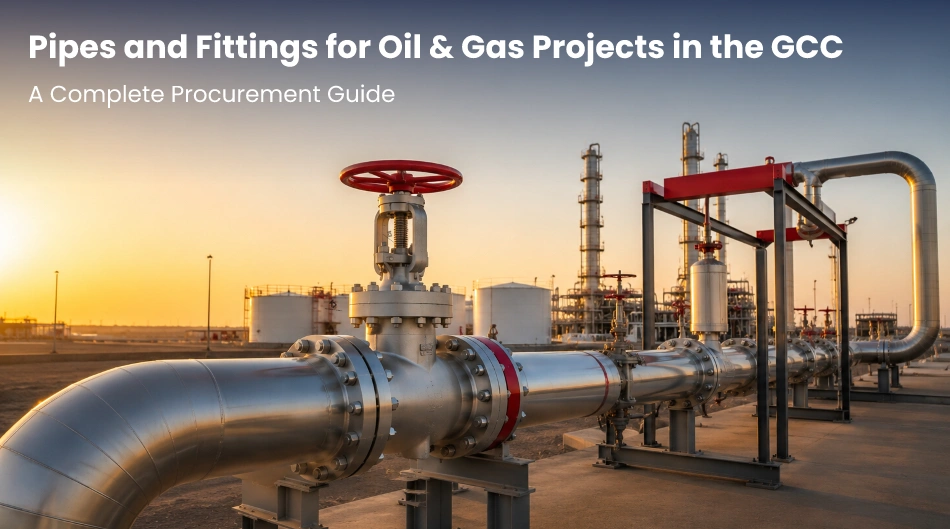
The Gulf Cooperation Council (GCC) region continues to invest heavily in oil and gas exploration, refineries, petrochemical complexes, LNG facilities, desalination plants, and energy infrastructure. Whether it is a new refinery in Saudi Arabia, an offshore project in the UAE, or a petrochemical expansion in Qatar, every project depends on reliable oil and gas pipes GCC and high-quality industrial pipe fittings GCC that meet strict international standards.
Selecting the right pipeline materials for oil and gas projects involves much more than comparing prices. Procurement teams must evaluate material grades, pressure ratings, corrosion resistance, manufacturing standards, certifications, inspection reports, and supplier capabilities to ensure long-term safety and operational reliability.
This complete procurement guide explains how EPC contractors, project engineers, procurement managers, and industrial buyers can source the right piping materials for oil and gas projects across the GCC.
Why Pipe Procurement Matters in Oil & Gas Projects
Industrial piping systems transport crude oil, natural gas, steam, chemicals, water, and process fluids under demanding operating conditions. A poorly informed procurement decision can lead to accelerated corrosion, pipeline leakage, equipment failure, unplanned operational downtime, and significant safety hazards, ultimately compromising the reliability, efficiency, and lifecycle performance of oil and gas infrastructure.
An effective procurement strategy should balance:
Selecting certified oil and gas project materials from reputable suppliers helps minimise lifecycle costs while enhancing the reliability, safety, and long-term operational performance of industrial piping systems.
Understanding Pipes and Fittings Used in GCC Oil & Gas Projects
Different applications require different materials and product types. Selecting the correct piping system depends on operating pressure, fluid characteristics, temperature, and environmental conditions.
Carbon Steel Pipes
Carbon steel pipes are widely used for transporting oil, gas, steam, and process fluids because they provide excellent strength, durability, and cost-effectiveness. They are commonly manufactured according to API and ASTM specifications for refinery and pipeline applications.
Stainless Steel Pipe Fittings
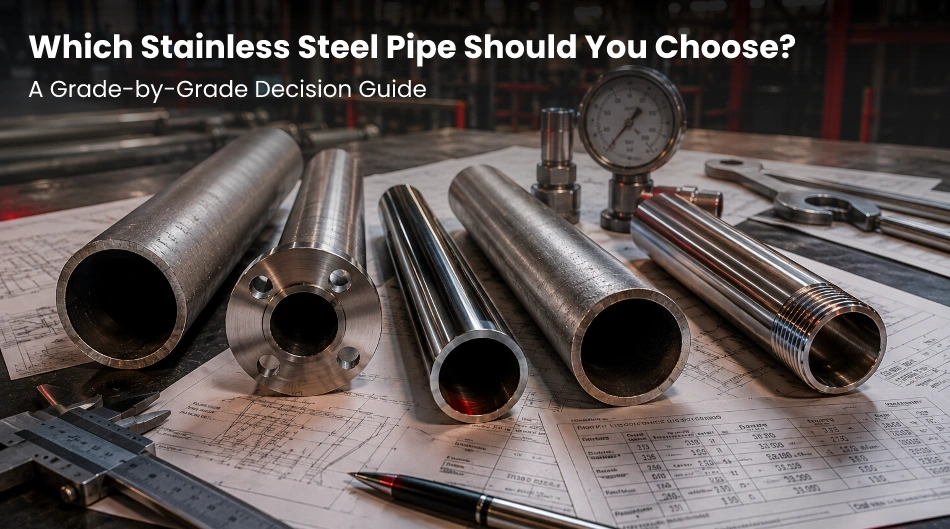
Stainless steel fittings offer superior corrosion resistance, making them suitable for chemical processing, offshore installations, desalination plants, and petrochemical facilities where aggressive media are present.
Duplex and Super Duplex Stainless Steel Pipes
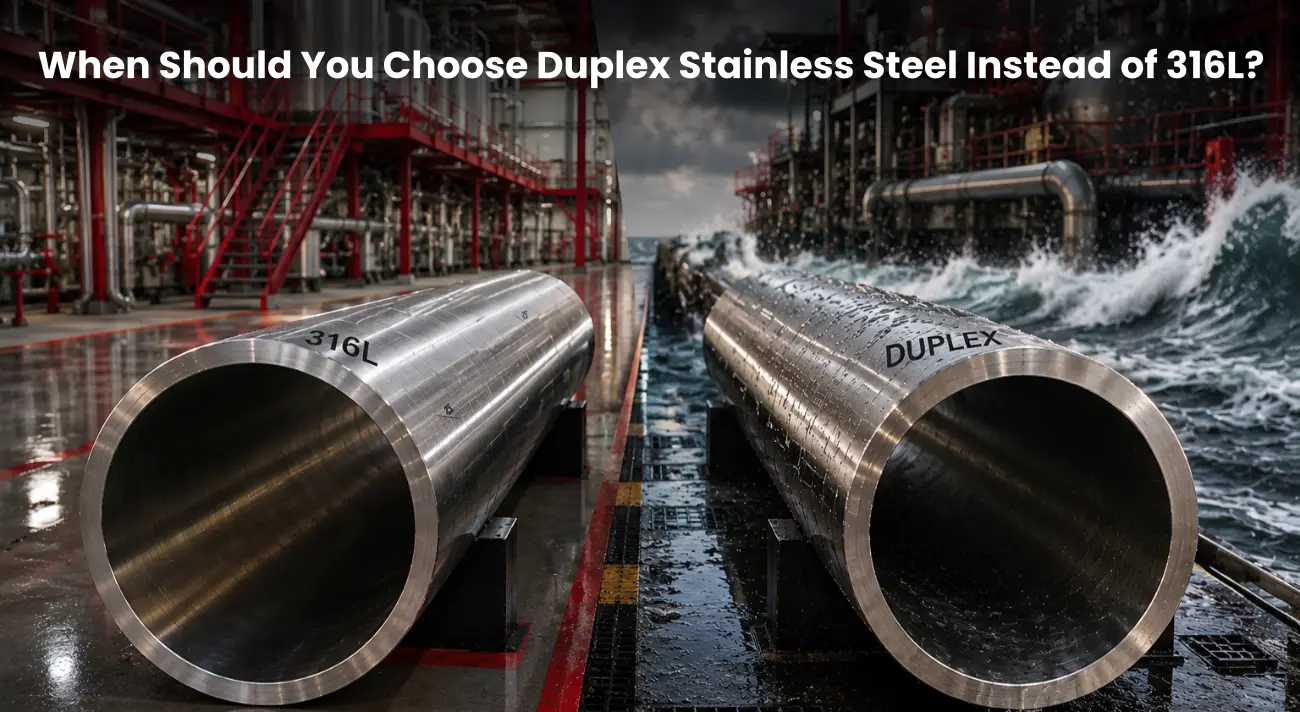
Duplex and Super Duplex stainless steels combine high mechanical strength with outstanding resistance to chloride corrosion and stress corrosion cracking. These materials are widely used in offshore platforms, seawater systems, and sour service environments across the GCC.
Alloy Steel Pipes
Alloy steel pipes perform well in high-temperature and high-pressure applications such as power plants, refineries, and process piping systems.
Common Pipe Fittings
Industrial piping systems typically include:
These components help control flow direction, connect pipelines, and simplify maintenance.
How to Select the Right Pipe Material
Material selection should always be based on engineering requirements rather than price alone. Procurement teams should evaluate several critical factors before placing an order.
Operating Pressure
Higher-pressure systems require stronger pipe materials and fittings that comply with applicable pressure ratings and piping codes.
Operating Temperature
High-temperature refinery applications often require alloy steel or specialised materials that retain their mechanical properties under extreme heat.
Corrosion Resistance
Projects involving seawater, chemicals, hydrogen sulphide (H₂S), or chloride-rich environments require corrosion-resistant materials such as stainless steel, duplex stainless steel, or nickel alloys.
Service Environment
Material selection differs for:
Each environment presents unique mechanical and chemical challenges.
Verify Compliance with International Standards
One of the most important steps in any GCC piping procurement guide is confirming compliance with internationally recognised manufacturing standards.
Key standards include:
Purchasing products manufactured to these standards improves compatibility, reliability, and regulatory compliance.
Pipe Procurement Checklist for EPC Contractors
A structured procurement process helps minimise project risks and delays.
Before approving any supplier, verify the following:
Following this checklist helps ensure materials meet project specifications before they reach the construction site.
Importance of Pipe Inspection Before Procurement
Quality verification should never be overlooked.
Professional inspection typically includes:
Independent third-party inspection agencies provide additional assurance that supplied materials comply with contract requirements.
Common Procurement Challenges in GCC Oil & Gas Projects
Despite careful planning, procurement teams frequently encounter challenges such as:
Working with established suppliers that maintain inventory and robust quality systems helps minimise these risks.
How to Choose a Reliable Pipeline Material Supplier in the GCC
A reputable supplier should offer:
Reliable suppliers understand EPC project requirements and can help procurement teams avoid costly delays.
Best Practices for Successful Procurement
Successful procurement combines technical evaluation with supplier due diligence.
Procurement professionals should:
These practices improve project quality, reduce operational risks, and support long-term asset performance.
Conclusion
Procuring pipes and fittings for oil and gas projects in the GCC requires careful planning, technical expertise, and strict adherence to international standards. Material selection should consider operating conditions, corrosion resistance, pressure ratings, certifications, and inspection requirements rather than focusing solely on initial cost.
Whether the project involves pipelines, refineries, petrochemical plants, offshore facilities, or desalination infrastructure, choosing certified products and experienced suppliers is essential for safe, reliable, and efficient operations. By adopting a structured procurement strategy and partnering with reputable suppliers, EPC contractors and procurement professionals can mitigate project risks, ensure compliance with international regulatory and engineering standards, and enhance the long-term reliability, safety, and operational performance of critical infrastructure.
Frequently Asked Questions (FAQs)
1. What pipes are commonly used in GCC oil and gas projects?
The GCC oil and gas industry relies on a range of pipe materials designed to perform under demanding operating conditions, including high pressure, elevated temperatures, corrosive fluids, and offshore environments. Carbon steel pipes are the most widely used for crude oil, natural gas, and process piping because they offer excellent strength and cost efficiency. Stainless steel pipes are preferred where corrosion resistance is critical, such as in chemical processing and desalination facilities. Duplex and Super Duplex stainless steel pipes provide superior resistance to chloride-induced corrosion, making them ideal for offshore platforms, seawater systems, and sour service applications. Alloy steel pipes are commonly selected for high-temperature and high-pressure refinery operations. The final material choice depends on the project's operating pressure, temperature, fluid characteristics, environmental exposure, and compliance with engineering specifications and international standards.
2. Which standards should pipes and fittings comply with?
Pipes and fittings used in GCC oil and gas projects must comply with internationally recognised standards to ensure safety, reliability, and compatibility across industrial facilities. API (American Petroleum Institute) standards, such as API 5L, specify requirements for line pipes used in oil and gas transportation. ASTM (American Society for Testing and Materials) standards define material composition and mechanical properties, while ASME (American Society of Mechanical Engineers) standards, including ASME B16.9 and ASME B16.5, govern the dimensions and manufacturing of pipe fittings and flanges. Many projects also require ISO 9001 certification to verify quality management systems. For sour service environments containing hydrogen sulphide (H₂S), compliance with NACE MR0175 / ISO 15156 is essential to minimise the risk of sulphide stress cracking. Verifying these standards during procurement helps ensure long-term operational performance and regulatory compliance.
3. Why are Mill Test Certificates (MTCs) important?
A Mill Test Certificate (MTC) is an essential quality assurance document that confirms a pipe or fitting has been manufactured according to the specified standards and material grade. It contains critical information such as the manufacturer's details, material specification, chemical composition, mechanical properties, heat number, dimensions, and results of factory testing. MTCs provide complete material traceability, allowing engineers and procurement teams to verify that every product supplied matches the project's approved material specifications. They also support third-party inspections, quality audits, and regulatory compliance throughout the project lifecycle. In large EPC, refinery, petrochemical, and offshore projects, reviewing Mill Test Certificates is a standard procurement practice to reduce the risk of counterfeit or non-compliant materials entering the supply chain.
4. How can buyers select a reliable pipe supplier in the GCC?
Selecting a reliable pipe supplier is critical to the successful execution of oil and gas projects in the GCC. Buyers should evaluate suppliers based on their industry experience, product quality, inventory capacity, and ability to meet international standards. A reputable supplier should provide products manufactured in accordance with API, ASTM, ASME, and ISO specifications and supply complete documentation, including Mill Test Certificates (MTCs) and inspection reports. Additional considerations include third-party inspection support, material traceability, efficient logistics across the GCC, and the capability to deliver within project timelines. Suppliers with experience serving EPC contractors, refineries, petrochemical plants, and offshore projects are generally better equipped to meet complex technical and commercial requirements. Partnering with an established and reputable supplier helps mitigate procurement risks, enhance project execution efficiency, and ensure the long-term reliability, integrity, and operational performance of critical oil and gas infrastructure.
5. What factors influence pipe material selection?
Selecting the appropriate pipe material requires a detailed engineering assessment of the project's operating conditions and performance requirements. Key factors include operating pressure, temperature, fluid composition, corrosion potential, and the installation environment, whether onshore, offshore, refinery, petrochemical, or desalination. Engineers also consider resistance to chemicals, seawater, hydrogen sulphide (H₂S), erosion, and mechanical stress. Compliance with international standards such as API, ASTM, ASME, and NACE is equally important to ensure safe and reliable operation. Other practical considerations include fabrication requirements, weldability, lifecycle cost, maintenance needs, and expected service life. Selecting the correct material at the design stage helps minimise maintenance costs, prevent premature failures, and maximise the reliability and longevity of industrial piping systems.

Our Location
Flat no 5, Swapna HSG Soc
Ltd., Charkop, Kandivali West,
Mumbai, Maharashtra, India.
400067