Specification :
Manufactured to ASTM, API, and ASME standards ensuring consistent quality and performance.


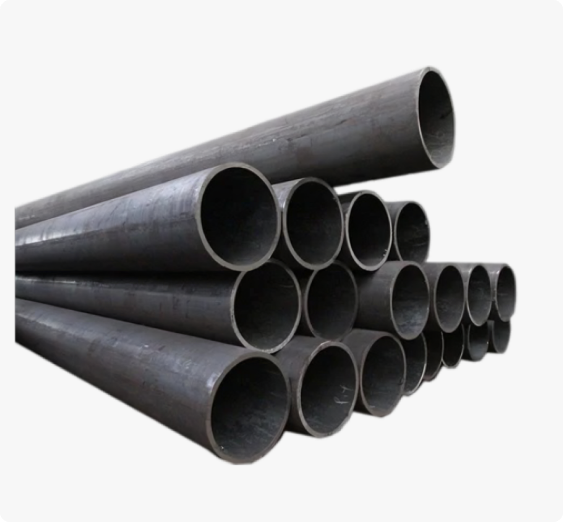
Specification :
Manufactured to ASTM, API, and ASME standards ensuring consistent quality and performance.
Size :
Available in a wide range of diameters to suit varied industrial applications.
Wall Thickness :
Offered in multiple thicknesses to meet pressure and structural requirements.
Type :
Seamless and ERW variants for both critical and general-purpose use.


In modern industrial infrastructure, selecting the right piping material is critical for performance, safety, and cost efficiency. Carbon Steel Seamless ERW Pipes and Tubes are among the most widely used solutions due to their strength, durability, and versatility across industries. Whether you are sourcing from a carbon steel seamless pipes supplier or a trusted carbon steel ERW pipes supplier, these products offer dependable performance for high-pressure and structural applications.
From oil & gas pipelines to construction and boiler systems, carbon steel pipes remain a preferred choice for engineers and procurement professionals worldwide.
What Are Carbon Steel Seamless and ERW Pipes?
Carbon Steel Seamless Pipes
Manufactured without welding joints, carbon steel seamless pipes provide uniform strength and are ideal for high-pressure environments such as refineries and power plants.
Carbon Steel ERW Pipes
Carbon steel ERW pipes (Electric Resistance Welded) are produced by welding rolled steel sheets, offering cost-effective solutions for structural and low-to-medium pressure applications.
These standards ensure consistent quality, strength, and performance across industries.
Seamless vs ERW Carbon Steel Pipes
Understanding the difference between seamless and ERW pipes helps in selecting the right product:
|
Feature |
Seamless Pipes |
ERW Pipes |
|
Manufacturing |
No weld |
Welded |
|
Strength |
Higher |
Moderate |
|
Cost |
Higher |
Cost-effective |
|
Application |
High-pressure systems |
Structural & general use |
Why Use Carbon Steel Pipes and Tubes?
High Strength and Pressure Resistance
Carbon steel pipes are known for their excellent mechanical properties, making them suitable for demanding industrial environments.
Durability and Long Service Life
Their robust structure ensures long-term performance with minimal maintenance.
Cost-Effective Solution
Compared to other materials, carbon steel offers a balance of performance and affordability.
Versatile Applications
From pipelines to construction, carbon steel pipes serve multiple industries efficiently.
Corrosion Resistance (with Treatment)
With proper coatings and treatments, carbon steel pipes corrosion resistance can be significantly enhanced.
Applications of Carbon Steel Pipes
Oil & Gas Industry
Used in pipelines, drilling, and transportation systems.
Construction Sector
Ideal for structural frameworks and infrastructure projects.
Boilers and Power Plants
Suitable for high-temperature and pressure systems.
Industrial and Engineering Applications
Used across manufacturing, processing, and heavy industries.
Carbon Steel Pipes Price and Buying Guide
The carbon steel pipes price per kg depends on grade, size, thickness, and manufacturing type (seamless or ERW).
Key Buying Considerations
How to Choose the Right Carbon Steel Pipes Supplier
Choosing the right supplier ensures quality and project success:
✅ Certified Materials: ASTM and API compliance
✅ Wide Product Range: Seamless, ERW, welded, and EFW
✅ Bulk Supply Capability: Trusted carbon steel tubes bulk supplier
✅ Competitive Pricing: Transparent cost structure
✅ Global Reach: Strong supply across UAE, Dubai, Abu Dhabi, and GCC
✅ Technical Expertise: Guidance for correct product selection
Carbon Steel Seamless ERW Pipes and Tubes are essential components in modern industrial systems, offering a combination of strength, versatility, and cost efficiency. Whether used in oil & gas, construction, or power generation, these pipes deliver reliable performance across diverse applications.
By partnering with a trusted carbon steel seamless pipes supplier or carbon steel ERW pipes supplier, businesses can ensure quality, timely delivery, and long-term operational success.
|
ASTM A106 Seamless Carbon Steel Pipes |
ASTM A106 seamless carbon steel pipes are specifically designed for applications involving elevated temperatures and high-pressure conditions. These pipes are manufactured without any welding seams, which ensures uniform strength and reliability throughout the structure. They are widely used in industries such as power plants, refineries, petrochemical facilities, and boilers where fluids and gases are transported at high temperatures. |
|
ASTM A53 ERW Pipes / ASTM A53 Grade B Pipes |
ASTM A53 ERW pipes, particularly ASTM A53 Grade B, are versatile carbon steel pipes used for structural, mechanical, and low-to-medium pressure applications. These pipes can be manufactured as welded (ERW) or seamless, but ERW variants are more commonly used due to their cost efficiency. |
|
ASTM A333 Carbon Steel Pipes |
ASTM A333 carbon steel pipes are engineered for use in low-temperature environments where toughness and impact resistance are critical. These pipes are commonly used in cryogenic applications, refrigeration systems, and industries operating in cold climates. |
|
API 5L Carbon Steel Pipes |
API 5L carbon steel pipes are specifically developed for the transportation of oil, natural gas, and other hydrocarbons in pipeline systems. These pipes are manufactured according to standards set by the American Petroleum Institute, ensuring strict quality and performance requirements. |
Specification :
Manufactured to ASTM, API, and ASME standards ensuring consistent quality and performance.
Size :
Available in a wide range of diameters to suit varied industrial applications.
Wall Thickness :
Offered in multiple thicknesses to meet pressure and structural requirements.
Type :
Seamless and ERW variants for both critical and general-purpose use.
Form :
Supplied in round, square, rectangular, and custom forms.
Length :
Single random, double random, or cut-to-length as per project needs.
Schedules :
SCH 10 to SCH XXS options for different pressure ratings.
Inspection, Test Reports : :
Provided with MTC (EN 10204 3.1), chemical, mechanical, and third-party inspection reports.
Packing :
Secure packaging in bundles, wooden crates, or as per client requirements.
End :
Plain, beveled, or threaded ends for easy installation.
Surface :
Mill finish, black, varnished, or coated as per application requirements.
Chemical Composition of Carbon Steel Pipes and Tubes
| specification | Grade | Chemical Composition [%] | ||||||||||||||
|---|---|---|---|---|---|---|---|---|---|---|---|---|---|---|---|---|
| C | Mn | P | S | Si | Cr | Mo | Cu | Ni | V | |||||||
| Min | Max. | Min | Max. | Max. | Max. | Min. | Max | Min. | Max | Min. | Max | Max | Max | Max | ||
| HYDROCARBON PROCESS INDUSTRY/STRUCTURAL/PRESSURE VESSEL TUBES | ||||||||||||||||
| ASTM A-53 | A B |
- | 0.25 0.30 | - - | 0.95 1.20 | 0.050 0.050 | 0.045 0.045 | - - | - - | - - | 0.40 0.40 | - - | 0.15 0.15 | 0.40 for S 0.40 for S | 0.40 0.40 | 0.08 0.08 |
| ASTM A-106 | A B C |
- | 0.25 0.30 0.35 |
0.27 0.29 0.29 |
0.93 1.06 1.06 |
0.035 0.035 0.035 |
0.035 0.035 0.035 |
0.10 0.10 0.10 |
- | - | 0.40 0.40 0.40 |
- | 0.15 0.15 0.15 |
0.40 0.40 0.40 |
0.40 - |
0.08 0.08 0.08 |
| ASTM A333 & A 334 | 1 6 |
- - |
0.30 0.30 | 0.40 0.29 | 1.06 1.06 | 0.025 0.025 | 0.025 0.025 | - 0.10 | - - | - - | - - | - - | - - | - - | - - | - - |
| SEAMLESS COLD DRAWN PRECISION STEEL TUBES FOR MECHANICAL APPLICATIONS/HYDRAULIC/PNEUMATIC POWER SYSTEMS | ||||||||||||||||
| EN 10305-1/ EN10305-4 | E 235 E 355 | 0.17 0.22 | 1.2 1.6 | 0.025 0.025 | 0.025 0.025 | 0.35 0.55 | 0.02 0.02 | |||||||||
| EN 10216-1 | P195 TR1 P235 TR1 |
0.13 0.16 | 0.7 1.2 | 0.025 0.025 | 0.02 0.02 | 0.35 0.35 | 0.3 0.3 | 0.08 0.08 | 0.3 0.3 | 0.3 0.3 | ||||||
| EN 10216-2 | P235 GH | 0.16 | 1.2 | 0.025 | 0.02 | 0.35 | 0.3 | 0.08 | 0.3 | 0.3 | 0.02 | |||||
| DIN 2391 | St - 45 St - 45 St - 52 |
- - - |
0.17 0.21 0.22 |
0.40 0.40 - |
- - 1.60 |
0.025 0.025 0.025 |
0.025 0.025 0.025 |
- | 0.35 0.35 0.55 |
- | - | - | - | - | - | - |
| ASTM A-519 | SAE 1010 SAE 1018 SAE 1026 SAE 1035 SAE 1040 SAE 1518 SAE 1541 SAE 4130 |
0.08 0.15 0.22 0.32 0.37 0.15 0.36 0.28 |
0.13 0.20 0.28 0.38 0.44 0.21 0.44 0.33 |
0.30 0.60 0.60 0.60 0.60 1.10 1.35 0.40 |
0.60 0.90 0.90 0.90 0.90 1.40 1.65 0.60 |
0.040 0.040 0.040 0.040 0.040 0.040 0.040 0.040 |
0.050 0.050 0.050 0.050 0.050 0.050 0.050 0.040 |
- - - - - - - 0.15 |
- - - - - - - 0.35 |
- - - - - - - 0.80 |
- - - - - - - 1.10 |
- - - - - - - 0.15 |
- - - - - - - 0.25 |
- - - - - - - - |
- - - - - - - - |
- - - - - - - - |
| BOILER/HEAT EXCHANGER/SUPERHEATER & CONDENSER TUBES | ||||||||||||||||
| ASTM A179 | - | 0.06 | 0.18 | 0.27 | 0.63 | 0.035 | 0.035 | - | - | - | - | - | - | - | - | - |
| ASTM A192 | 0.06 | 0.18 | 0.27 | 0.63 | 0.035 | 0.035 | - | 0.25 | - | - | - | - | - | - | - | |
| ASTM A 210 | A-1 C |
- - |
0.27 0.35 | - 0.29 | 0.93 1.06 | 0.035 0.035 | 0.035 0.035 | 0.10 0.10 | - - | - - | - - | - - | - - | - - | - - | - - |
| ASTM A 213 | T-11 T-12 T-22 |
0.05 0.05 0.05 |
0.15 0.15 0.15 |
0.30 0.30 0.30 |
0.60 0.61 0.60 |
0.025 0.025 0.025 |
0.025 0.025 0.025 |
0.50 - - |
1.00 0.50 0.50 |
1.00 0.80 1.90 |
1.50 1.25 2.60 |
0.44 0.44 0.87 |
0.65 0.65 1.13 |
- | - | - |
| ASTM A335 |
P-11 P-12 P-22 |
0.05 0.05 0.05 |
0.15 0.15 0.15 |
0.30 0.30 0.30 |
0.60 0.61 0.60 |
0.025 0.025 0.025 |
0.025 0.025 0.025 |
0.50 - - |
1.00 0.50 0.50 |
1.00 0.80 1.90 |
1.50 1.25 2.60 |
0.44 0.44 0.87 |
0.65 0.65 1.13 |
- | - | - |
| BS 3059 Pt I | 320 | - | 0.16 | 0.30 | 0.70 | 0.040 | 0.040 | 0.10 | 0.35 | - | - | - | - | - | - | - |
| BS 3059 Pt II | 622-490 | 0.08 | 0.15 | 0.40 | 0.70 | 0.030 | 0.030 | - | 0.50 | 2.00 | 2.50 | 0.90 | 1.20 | - | - | - |
| DIN 1629 | St- 37.0 St - 52 | - - | 0.17 0.22 | - - | - - | 0.040 0.040 | 0.040 0.035 | - - | - - | - - | - - | - - | - - | - - | - - | - - |
| DIN 17175 | St - 35.8 St - 45.8 | - - | 0.17 0.21 | 0.40 0.40 | 0.80 1.20 | 0.040 0.040 | 0.040 0.040 | 0.10 0.10 | 0.35 0.35 | - - | - - | - - | - - | - - | - - | - - |
| RAILWAYS | ||||||||||||||||
| IS:1239 Pt I | - | - | - | - | - | 0.050 | 0.050 | - | - | - | - | - | - | - | - | - |
| IS:1161 | YST-210 YST-240 YST-310 |
- | 0.12 0.16 0.25 |
- - - |
0.60 1.20 1.30 |
0.040 0.040 0.040 |
0.040 0.040 0.040 |
- | - | - | - | - | - | - | - | - |
Mechanical Properties Of Carbon Steel Pipes and Tubes
|
Mechnical Properties |
SPECIFIC REQUIREMENT |
|||
|---|---|---|---|---|
|
Specification |
Tensile Strength |
Yield Strength |
Elongation |
|
|
Mpa |
Mpa |
50mm MIN Longitudinal |
||
| ASTM A 53/ASTM A 53/B ASTM A 106/A ASTM A 106/B ASTM A 106/C |
331MIN |
207 MIN |
36 |
Cr Mo Cu Ni Va |
| ASTM A 333/1ASTM A 333/6 ASTM A 334/1 ASTM A 334/6 |
380MIN |
205MIN |
25/20 |
Impact AS-50F |
Our Carbon Steel Seamless & ERW Pipes and Tubes Supplier are used in a wide range of applications and various industries. Below are a few of them:

Application Industries

Aerospace Industry

Food Processing Industry

Pulp & Paper Indusry

Energy Industry

Pharmaceuticals Industry

Power Plant Industry

Chemical Industry

Oil and Gas Industry
Get clear answers to common queries about our steel products, services, and delivery processes.

Yes. KVN Steels supplies Carbon Steel Seamless and ERW Pipes and Tubes throughout the United Arab Emirates, including Abu Dhabi, Dubai, Sharjah, Ajman, Ras Al Khaimah, and Fujairah. Our inventory supports EPC contractors, infrastructure developers, oil & gas operators, and industrial manufacturers with internationally compliant piping solutions and dependable delivery schedules.
Our product portfolio comprises ASTM A106 Seamless Pipes, ASTM A53 Seamless and ERW Pipes, API 5L Line Pipes, ASTM A179 Boiler Tubes, ASTM A192 Heat Exchanger Tubes, ASTM A210 Boiler Tubes, Black Steel Pipes, Galvanised Pipes, Precision Tubes, and custom cut-to-length solutions. These products are manufactured in multiple sizes, wall thicknesses, schedules, and end preparations to satisfy diverse engineering applications.
Carbon Steel Seamless Pipes are manufactured without a welded joint, providing excellent pressure-bearing capability and structural uniformity for high-pressure and elevated-temperature applications. ERW Pipes are produced through electric resistance welding and offer outstanding dimensional consistency and cost efficiency for low- to medium-pressure service. The appropriate selection depends upon the operating conditions, pressure requirements, and project specifications.
Carbon Steel Seamless and ERW Pipes are commonly supplied in ASTM A106 Grade B, ASTM A53 Grades A and B, API 5L Grades B, X42, X52, X60, and X65, depending on the intended application. Grade selection is determined by design pressure, operating temperature, mechanical requirements, and the applicable international standards.
The selection of Carbon Steel Pipes and Tubes should be based upon operating pressure, service temperature, fluid characteristics, pipe dimensions, corrosion conditions, manufacturing process, and compliance with ASTM, API, and ASME specifications. A comprehensive engineering evaluation ensures the selection of the most appropriate material, facilitates compliance with applicable international standards, and supports long-term operational reliability throughout the asset's service life.
Carbon Steel Seamless and ERW Pipes provide an excellent combination of mechanical strength, fabrication versatility, weldability, and cost efficiency. Their ability to perform reliably under a broad range of operating pressures and temperatures makes them a preferred solution for industrial process piping, structural applications, and fluid transmission systems.
Carbon Steel Seamless and ERW Pipes and Tubes are extensively employed across oil & gas production, petrochemical processing, power generation, refineries, water transmission, construction, infrastructure development, chemical processing, fire protection systems, and general engineering industries, where dependable mechanical performance and pressure integrity are essential.
Carbon Steel Seamless and ERW Pipes and Tubes are commonly manufactured in accordance with ASTM A106, ASTM A53, API 5L, ASTM A179, ASTM A192, ASTM A210, ASME SA106, ASME SA53, and ASME B36.10M specifications. Compliance with internationally recognised ASTM, ASME, and API specifications ensures dimensional accuracy, mechanical integrity, pressure performance, and consistent material quality, supporting reliable operation across a wide range of industrial applications.
To ensure compliance with internationally recognised engineering and quality standards, Carbon Steel Seamless and ERW Pipes undergo comprehensive inspection procedures, including Hydrostatic Pressure Testing, Ultrasonic Testing (UT), Eddy Current Testing (ECT), Positive Material Identification (PMI), Dimensional Verification, Visual Inspection, Chemical and Mechanical Property Evaluation, and complete material traceability supported by Mill Test Certificates (MTCs) prior to dispatch.
A trusted supplier offers internationally certified products, complete quality documentation, technical engineering support, reliable inventory availability, and efficient project logistics. Partnering with an experienced Carbon Steel Seamless and ERW Pipes supplier helps ensure specification compliance, consistent product quality, timely project execution, and long-term operational performance for critical industrial piping systems.

Our Location
Flat no 5, Swapna HSG Soc
Ltd., Charkop, Kandivali West,
Mumbai, Maharashtra, India.
400067


