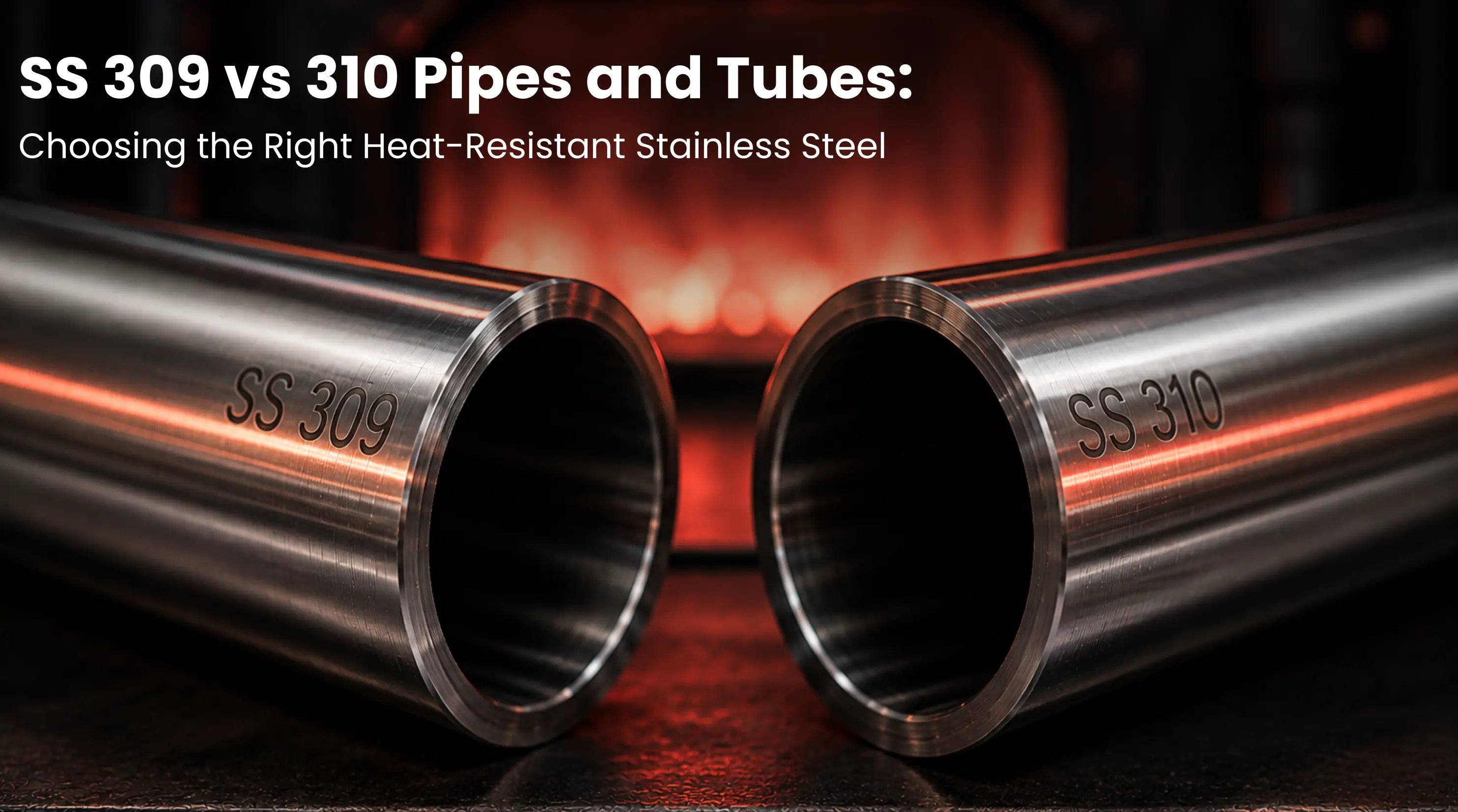
Which Stainless Steel Grade Performs Better in High-Temperature Applications?
Selecting the right stainless steel grade for elevated-temperature service is a critical engineering decision that directly affects equipment reliability, operational efficiency, and lifecycle costs. Among the most widely specified heat-resistant materials, SS 309 and SS 310 pipes and tubes are recognised for their ability to withstand oxidation, thermal cycling, and prolonged exposure to high-temperature environments.
Although both grades belong to the austenitic stainless steel family, their performance characteristics differ considerably when subjected to continuous thermal stress. Understanding these differences enables engineers, procurement specialists, and plant operators to select a material that aligns with process requirements, temperature thresholds, and maintenance objectives.
Quick Answer: What Is the Difference Between SS 309 and SS 310 Pipes and Tubes?
SS 309 stainless steel pipes and tubes are engineered for intermittent high-temperature service and applications requiring a balance between thermal resistance and cost efficiency. SS 310 stainless steel pipes and tubes contain higher levels of chromium and nickel, providing enhanced oxidation resistance and superior performance in continuous extreme-temperature environments.
In general:
What Makes SS 309 and SS 310 Suitable for High-Temperature Service?
Heat-resistant stainless steels are specifically developed to retain mechanical stability and resist oxidation when exposed to temperatures that exceed the capabilities of conventional stainless steel grades.
SS 309 and SS 310 achieve this performance through their elevated chromium and nickel content, which helps form a protective oxide layer on the material surface.
Key performance advantages include:
When Should SS 309 Pipes and Tubes Be Used?
SS 309 pipes and tubes are commonly selected for industrial systems exposed to recurring thermal cycles and moderately elevated operating temperatures.
Typical applications include:
Their combination of heat resistance and economic value makes them suitable for a broad range of industrial installations.
When Is SS 310 the Better Choice?
SS 310 pipes and tubes are designed for applications where continuous exposure to extreme temperatures is unavoidable. The higher alloy content improves oxidation resistance and allows the material to maintain performance under more severe operating conditions.
Common applications include:
Because of their superior resistance to scaling and thermal fatigue, SS 310 grades are frequently specified for mission-critical equipment operating under sustained heat loads.
Why Do Industrial Facilities Choose Heat-Resistant Stainless Steel Pipes?
High-temperature operations place significant stress on piping systems and process equipment. Materials that cannot tolerate thermal expansion, oxidation, or scaling often experience premature degradation, resulting in increased maintenance costs and operational interruptions.
Heat-resistant stainless steel grades such as SS 309 and SS 310 help industrial facilities:
These benefits make them essential materials across industries where temperature control and equipment durability are operational priorities.
Industries That Commonly Use SS 309 and SS 310 Pipes and Tubes
Across the UAE and other industrial markets, these grades support critical infrastructure in sectors that operate under demanding thermal conditions.
Major application sectors include:
As industrial facilities continue to pursue greater efficiency and operational resilience, demand for advanced heat-resistant stainless steel piping solutions continues to grow.
How to Select the Right Steel Grade for Your Project
The optimal stainless steel grade should be determined by a comprehensive assessment of operating conditions, including temperature exposure, thermal cycling, oxidation requirements, and mechanical performance demands.
Important evaluation factors include:
Projects involving intermittent heat exposure often benefit from SS 309, while continuous high-temperature service typically favours SS 310 due to its enhanced thermal performance.
Final Recommendation
Rather than asking which grade is universally better, the more relevant question is which grade best matches the demands of your operating environment.
SS 309 provides a practical balance of thermal performance and cost-effectiveness for a wide range of industrial heating applications. In contrast, SS 310 offers superior oxidation resistance and enhanced thermal stability, making it particularly suitable for equipment operating under prolonged high-temperature conditions. Selecting the appropriate grade enables industries to improve operational reliability, extend equipment lifespan, and achieve greater long-term value from their investments.
Frequently Asked Questions (FAQs)
What is the main difference between SS 309 and SS 310 pipes and tubes?
SS 309 and SS 310 are both heat-resistant austenitic stainless steel grades, but SS 310 contains higher chromium and nickel content. This gives SS 310 superior oxidation resistance and thermal stability in continuous high-temperature environments, while SS 309 is often preferred for intermittent heat exposure and cost-sensitive industrial applications.
Which stainless steel grade is better for continuous high-temperature service, SS 309 or SS 310?
SS 310 is generally considered the better choice for continuous high-temperature service. Its enhanced chromium and nickel composition allows it to resist scaling, oxidation, and thermal degradation more effectively than SS 309 when exposed to prolonged elevated temperatures in furnaces, kilns, and thermal processing equipment.
Where are SS 309 and SS 310 pipes and tubes commonly used?
SS 309 and SS 310 pipes and tubes are widely used in industries that operate under extreme heat conditions, including petrochemical plants, power generation facilities, oil and gas processing units, heat-treatment systems, furnaces, boilers, kilns, and industrial manufacturing plants. Their heat-resistant properties make them suitable for critical thermal processing applications.
Why are SS 310 pipes preferred for furnace applications?
SS 310 pipes are frequently specified for furnace applications because they offer excellent resistance to oxidation and scaling at elevated temperatures. Their ability to maintain structural integrity under continuous thermal stress helps improve equipment reliability, reduce maintenance requirements, and extend service life in furnace environments.
How do engineers choose between SS 309 and SS 310 pipes and tubes?
Engineers evaluate several factors when selecting between SS 309 and SS 310, including operating temperature, duration of heat exposure, oxidation resistance requirements, mechanical loading conditions, fabrication needs, and project budget. SS 309 is often selected for moderate high-temperature service, while SS 310 is preferred for more demanding continuous-temperature applications.
Which ASTM specification covers SS 309 and SS 310 stainless steel pipes?
SS 309 and SS 310 stainless steel pipes are commonly manufactured in accordance with ASTM A312 specifications, including ASTM A312 TP309 and ASTM A312 TP310 grades. These standards define the material requirements for seamless and welded stainless steel pipes used in high-temperature and corrosive service conditions.

Our Location
Flat no 5, Swapna HSG Soc
Ltd., Charkop, Kandivali West,
Mumbai, Maharashtra, India.
400067