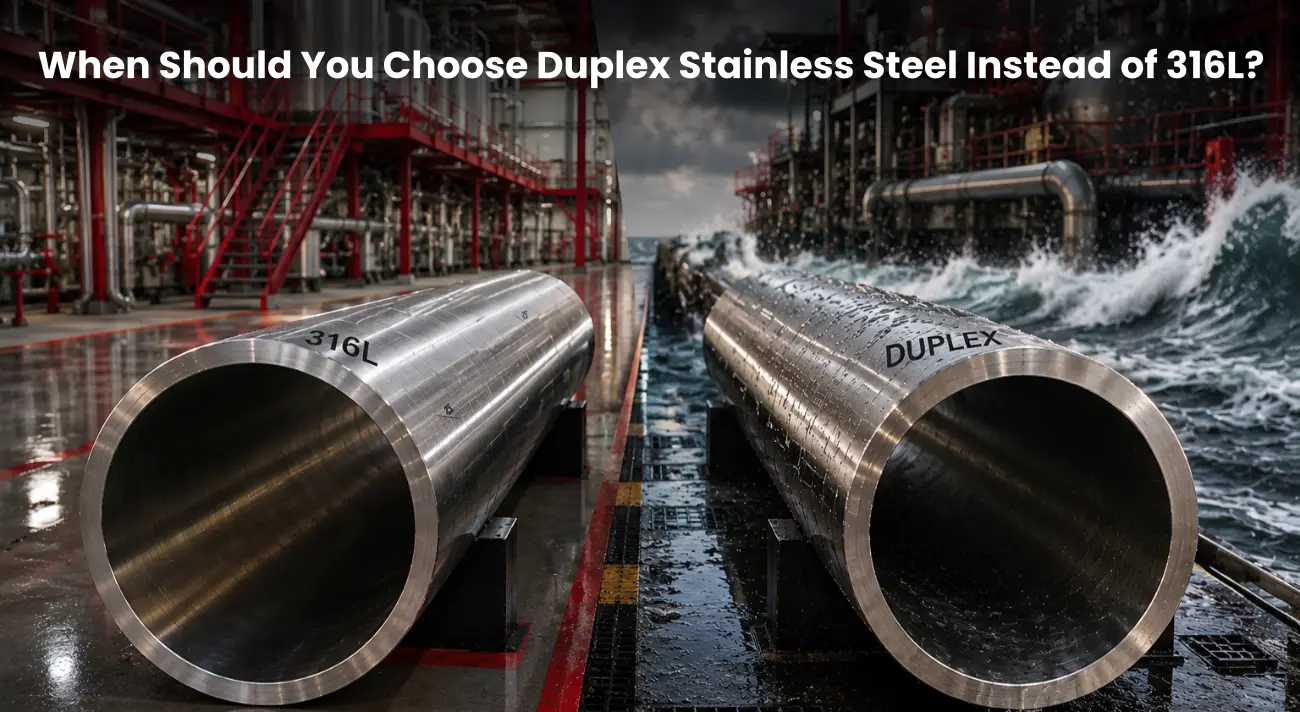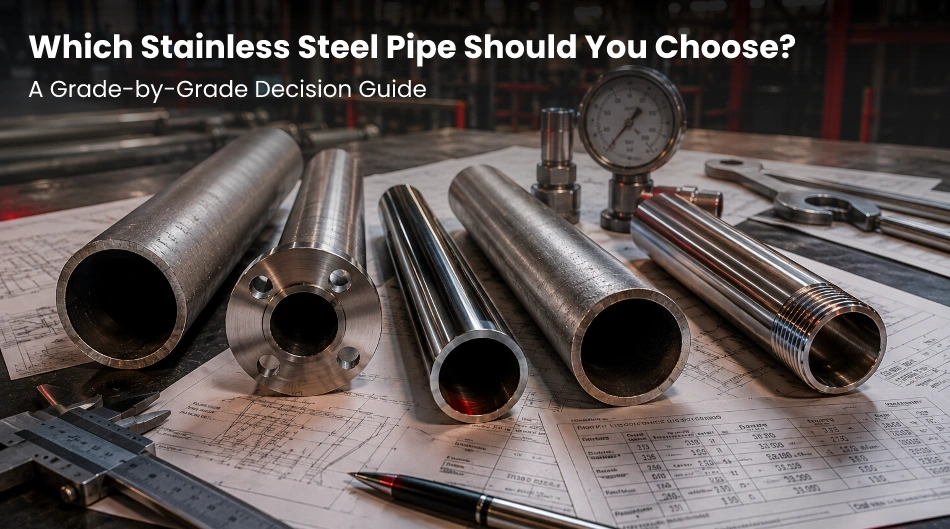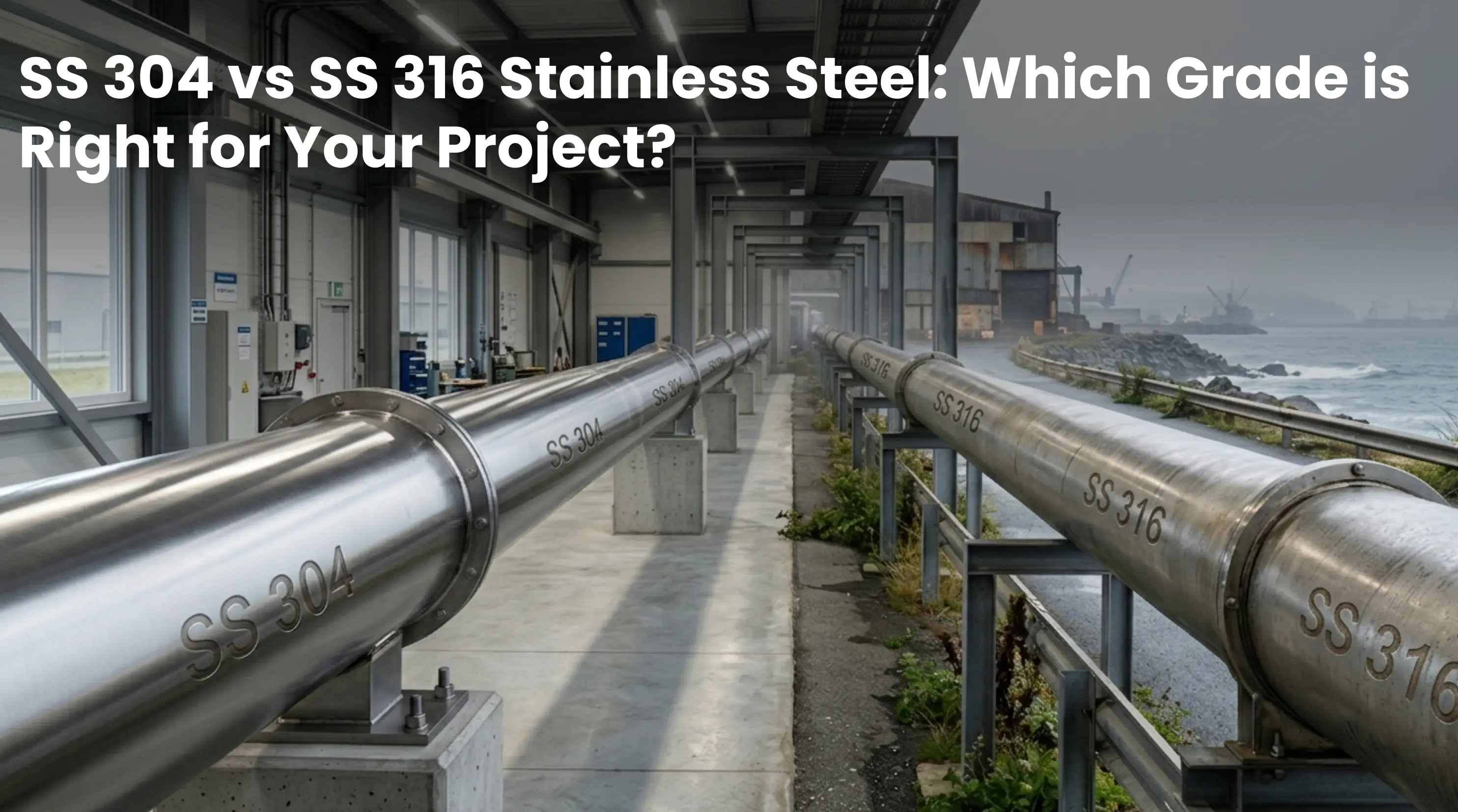
Choosing between SS 304 vs SS 316 is one of the most common decisions engineers, buyers, and project managers face when selecting stainless steel. Both grades are widely used, but they are not interchangeable in every situation. The right choice depends on your environment, budget, and application.
This guide breaks down the difference between SS 304 and SS 316, helping you make a confident, cost-effective decision.
SS 316 is more corrosion-resistant due to molybdenum content, making it ideal for marine and chemical environments, while SS 304 is more affordable and suitable for general-purpose applications.
SS 304 vs SS 316: Key Comparison Table
| Property | SS 304 | SS 316 |
|---|---|---|
| Composition | Chromium + Nickel | Chromium + Nickel + Molybdenum |
| Corrosion Resistance | Good | Superior |
| Price | Lower | Higher |
| Marine Use | Limited | Excellent |
| Chemical Resistance | Moderate | High |
| Common Use | Kitchen, construction | Marine, chemical, pharma |
What is the Main Difference Between SS 304 and SS 316?
The main difference between SS 304 and SS 316 lies in composition.
The addition of molybdenum in SS 316 vs SS 304 significantly improves resistance to chlorides and corrosive environments.
Corrosion Resistance: Which is Better?
SS 304 vs SS 316 Corrosion Resistance
Which is more corrosion resistant, 304 or 316?
SS 316 is more corrosion-resistant, especially in marine and industrial chemical environments.
Price Comparison: Is SS 316 More Expensive Than SS 304?
Yes, there is a noticeable SS 304 vs SS 316 price difference.
Is SS 316 more expensive than SS 304?
Yes, but the added cost is justified in corrosive environments where durability matters.
Applications: Where Should You Use Each?
SS 304 Applications
SS 304 vs SS 316 for kitchen:
SS 304 is usually sufficient for indoor kitchen use.
SS 316 Applications
SS 304 vs SS 316 for marine use:
SS 316 is the preferred choice due to its resistance to saltwater corrosion.
High-Temperature Performance
SS 316 vs 304 High Temperature Performance
For most applications, both are suitable, but SS 316 performs better under combined heat and corrosion conditions.
Food Processing: Which One is Better?
SS 304 vs SS 316 for Food Processing
Use SS 316 for dairy, seafood, or chemical-heavy processing.
Pipes and Tubes: Which Should You Choose?
SS 304 vs SS 316 Pipes and Tubes
If your system involves chemicals or salt exposure, go with SS 316 pipes and tubes.
SS 304 vs SS 316: Strength and Durability
Both grades deliver impressive strength and durability—however, their real distinction lies in how they perform under different environmental conditions.
The real advantage of SS 316 is not strength, but long-term resistance to corrosion.
Which Should You Choose: SS 304 or SS 316?
Choose SS 304 if:
Choose SS 316 if:
Final Conclusion
The choice between SS 304 vs SS 316 stainless steel depends on your application requirements, environmental exposure, and budget.
Making the right decision not only improves performance but also reduces long-term maintenance and replacement costs.
Frequently Asked Questions
What sets SS 304 apart from SS 316 stainless steel?
The key difference is the addition of molybdenum in SS 316, which significantly improves resistance to corrosion—especially in chloride-rich, marine, and chemical environments. SS 304, while durable and versatile, is better suited for general-purpose applications with limited exposure to harsh conditions.
Which stainless steel is better, SS 304 or SS 316?
Neither is universally better—it depends on the application. SS 304 is ideal for cost-sensitive, indoor, and low-corrosion environments, while SS 316 is the superior choice for marine, chemical, and outdoor applications requiring higher durability.
Can SS 304 replace SS 316?
SS 304 can replace SS 316 only in controlled environments without exposure to moisture, salt, or chemicals. In aggressive conditions, using SS 304 instead of SS 316 can lead to faster corrosion and reduced lifespan.
Is SS 316 worth the extra cost?
Yes, in environments where corrosion is a concern. Although SS 316 has a higher upfront cost, it offers better longevity, reduced maintenance, and lower long-term replacement costs, making it a smarter investment.
Which stainless steel lasts longer: SS 304 or SS 316?
SS 316 typically lasts longer in harsh or outdoor environments due to its enhanced resistance to corrosion and chemical exposure, whereas SS 304 performs reliably in stable, indoor conditions.

Our Location
Flat no 5, Swapna HSG Soc
Ltd., Charkop, Kandivali West,
Mumbai, Maharashtra, India.
400067