Titanium Type :
Commercial-Grade Pure Titanium


Titanium Type :
Commercial-Grade Pure Titanium
UNS Designation :
R50400
Werkstoff Number :
3.7035
Strength Profile :
Higher strength than commercially pure Grade 1


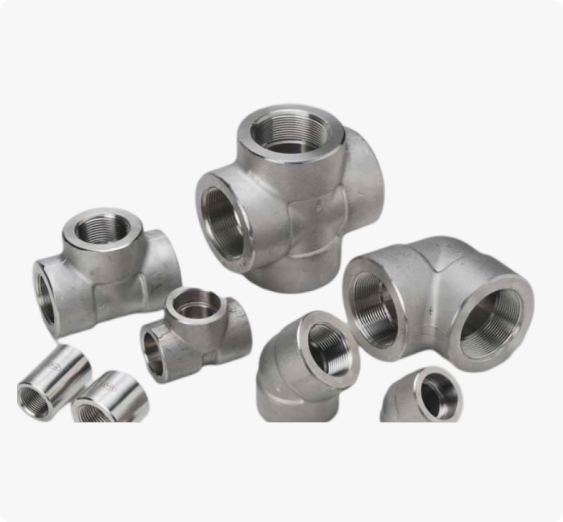
Titanium Grade 2 forged fittings represent the perfect balance of strength, corrosion resistance, and precision engineering, making them a preferred choice across industries where durability and reliability are non-negotiable. Known for their excellent strength-to-weight ratio and outstanding resistance to oxidizing environments, Titanium Gr 2 forged fittings have become essential in chemical processing, oil and gas, marine engineering, and aerospace applications. Unlike many alloys, Ti Grade 2 offers not only superior corrosion resistance in seawater, chlorides, and mildly reducing acids but also the toughness needed for high-performance systems under extreme conditions. In India, the history of titanium usage dates back decades, particularly in defense and marine infrastructure, where the material’s versatility has played a critical role in advancing technology. Today, the precision-driven manufacturing of Titanium Grade 2 forged fittings, crafted using advanced forging techniques, ensures dimensional accuracy, leak-proof performance, and long-term reliability. Whether it’s for high-pressure piping systems, heat exchangers, or mission-critical equipment, these fittings embody the promise of quality engineering combined with material excellence. This unique blend of performance and adaptability is why Titanium Grade 2 forged fittings stand out in the global market, especially for industries seeking solutions that meet international standards while remaining cost-effective in the long run.
When evaluating the benefits of Titanium Grade 2 forged fittings, it becomes clear why they are increasingly viewed as a strategic investment rather than a simple material purchase. Their lightweight structure reduces overall system weight without compromising on tensile strength, offering engineers and project managers a material advantage in industries where efficiency and safety drive profitability. In India’s growing industrial landscape, the demand for Titanium Grade 2 forged fittings has surged, aligning with projects in energy, desalination, petrochemicals, and pharmaceutical sectors. The trustworthiness of this material stems from decades of proven performance, supported by stringent quality checks and international certifications, reinforcing its authoritativeness in global supply chains. By combining deep technical expertise with practical application insights, Titanium Grade 2 forged fittings are positioned not just as components but as critical enablers of long-term industrial growth. Their legacy in India and expanding presence worldwide highlight how the fusion of material science, manufacturing excellence, can build both brand authority and customer trust in today’s competitive markets.
| STANDARD | UNS | WNR. |
|---|---|---|
| Titanium Gr 2 | R50400 | 3.7035 |
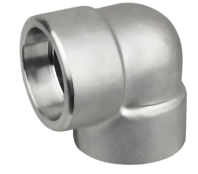
Socket-Weld Elbow
A socket-weld elbow changes pipe direction through a compact welded joint, making it useful where secure connections and efficient routing are required.
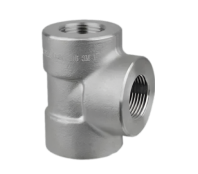
Forged Tee
A forged tee creates a branch from a main pipeline, allowing flow to split or combine while maintaining a compact and reliable connection.
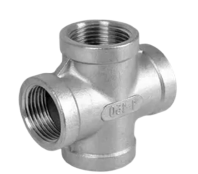
Cross Fitting
A cross fitting connects four pipe runs at a single point, supporting multi-directional flow layouts where space and routing efficiency matter.
Full Coupling
A full coupling joins two pipe sections across their ends, providing a practical connection for extending or assembling a piping line.
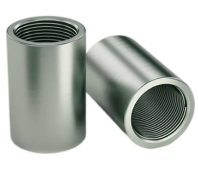
Half Coupling
A half coupling connects a pipe to a branch, valve, or equipment connection, offering a compact transition between piping components.
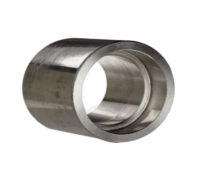
Pipe Cap
A pipe cap closes an open pipe end to isolate the line, protect the connection, or prepare the system for maintenance or future extension.
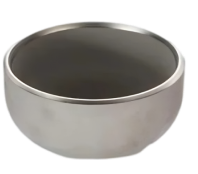
Forged Union
A forged union joins two pipe sections with a detachable connection, making installation, inspection, and maintenance easier.
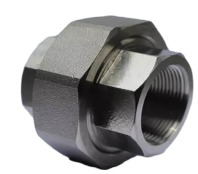
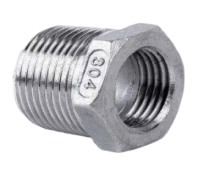
Bushing
A bushing adapts one connection size to another, helping connect components with different diameters while keeping the piping arrangement compact.
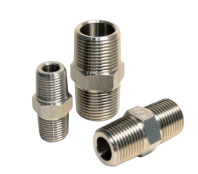
Pipe Nipple
A pipe nipple provides a short connection between pipes, valves, fittings, or equipment where a compact threaded or welded link is needed.
Titanium Type :
Commercial-Grade Pure Titanium
UNS Designation :
R50400
Werkstoff Number :
3.7035
Strength Profile :
Higher strength than commercially pure Grade 1
Corrosion Performance :
Strong resistance to seawater, chlorides and process chemicals
Mechanical Character :
Good balance of strength, ductility and toughness
Joining Options :
Socket-Weld and Screwed Ends
Typical Applications :
Chemical plants, desalination, marine and power-generation systems
Chemical Composition of Titanium Gr 2 Forged Fittings
| C | Fe | H | N | O | Ti |
|---|---|---|---|---|---|
| 0.1 | 0.3 | 0.015 | 0.03 | 0.25 | 99.2 |
Mechanical Properties Of Titanium Grade 2 Forged Fittings
| Grade | Tensile (ksi) | Yield Strength (ksi) | Hardness |
|---|---|---|---|
| Titanium Gr 2 | 50 | 40 | 14.9 |
Physical Properties of Titanium Gr 2 Forged Fittings
| Physical Properties | Metric | English |
|---|---|---|
| Density | 4.51 g/cc | 0.163 lb/in³ |
Our Titanium Gr 2 Forged Fittings are used in a wide range of applications and various industries. Below are a few of them:

Application Industries

Aerospace Industry

Food Processing Industry

Pulp & Paper Indusry

Energy Industry

Pharmaceuticals Industry

Power Plant Industry

Chemical Industry

Oil and Gas Industry
Get clear answers to common queries about our steel products, services, and delivery processes.

Titanium Grade 2 is an unalloyed titanium grade that provides a useful balance of strength, ductility, toughness, weldability, and corrosion resistance. It is widely selected for demanding industrial service where both durability and corrosion performance are important.
The material is identified by UNS R50400 and Werkstoff Number 3.7035. These designations help purchasers, engineers, and quality teams confirm that the supplied material matches the specified grade.
ASTM B381 / ASME SB381 covers titanium and titanium alloy forgings, including Grade F-2, which corresponds to UNS R50400. The standard establishes requirements for chemical composition and applicable mechanical properties.
Grade 2 generally provides higher mechanical strength than Grade 1 while retaining the corrosion resistance and ductility associated with commercially pure titanium. It is therefore a practical choice when the application requires a stronger unalloyed grade.
Its corrosion resistance makes it suitable for many chemical, marine, and process environments. However, material selection should consider the actual medium, concentration, temperature, pressure, contamination, and operating conditions rather than relying on grade designation alone.
Yes. Grade 2 is generally regarded as readily weldable when appropriate titanium welding procedures and contamination controls are followed. Proper shielding and preparation are important because titanium can react with atmospheric gases at elevated temperatures.
Typical configurations include elbows, tees, crosses, couplings, unions, bushings, caps, and nipples. The suitable configuration depends on pipe size, connection method, dimensional requirements, and the design of the piping system.
Common uses include chemical-processing equipment, marine systems, heat-transfer equipment, desalination, process piping, and other corrosion-sensitive installations. The final selection should always be based on the specific service environment and design requirements.
For Grade F-2 forgings, the applicable specification defines requirements for properties such as tensile strength, yield strength, and elongation. As a reference, published Grade 2 data lists approximately 345 MPa minimum tensile strength, 275 MPa minimum yield strength, and 20% elongation, but the purchase specification and material condition should govern.
A quotation request should specify the component type, nominal size, connection style, pressure class where applicable, material standard, quantity, dimensional standard, delivery requirements, and inspection or certification needs. Providing complete information reduces ambiguity during manufacturing and quality verification.

Our Location
Flat no 5, Swapna HSG Soc
Ltd., Charkop, Kandivali West,
Mumbai, Maharashtra, India.
400067


