UNS / Werkstoff Number :
UNS N08800 / W.Nr. 1.4876


UNS / Werkstoff Number :
UNS N08800 / W.Nr. 1.4876
Microstructure :
Austenitic Nickel-Iron-Chromium Alloy
Maximum Recommended Service Temperature :
Up to approximately 1100°C in oxidising atmospheres
Oxidation & Carburisation Resistance :
Excellent resistance to oxidation, carburisation, and sulphidation at elevated temperatures


Industries operating in elevated-temperature and corrosive environments require tubing materials capable of maintaining long-term structural reliability, oxidation resistance, and mechanical stability.
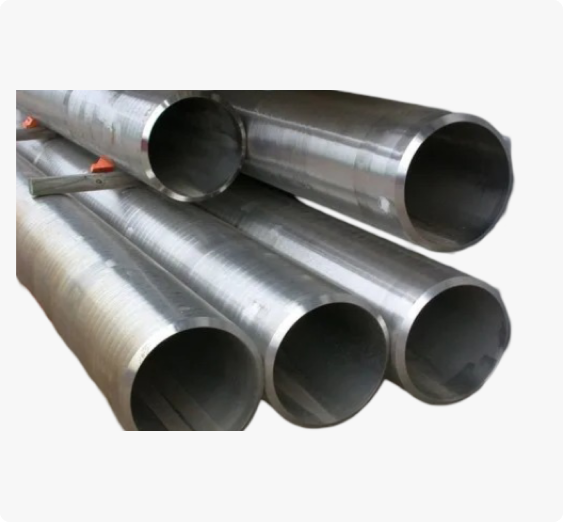
Engineered for outstanding resistance against oxidation, carburization, and thermal fatigue, Incoloy 800 alloy tubes perform efficiently in industrial environments where ordinary stainless steel materials may lose strength under continuous heat exposure. Their advanced metallurgical composition makes them suitable for pressure-intensive and high-temperature industrial operations.
What are Incoloy 800 Tubes?
Incoloy 800 tubes are nickel-iron-chromium alloy tubes manufactured according to:
The alloy is specifically developed for elevated-temperature applications requiring:
Because of these properties, Incoloy 800 tubes are widely used across thermal engineering and corrosive industrial process systems.
Why Industries Prefer Incoloy 800 Tubes
Exceptional High-Temperature Resistance
One of the most significant advantages of Incoloy 800 tubing is its ability to maintain structural stability under prolonged elevated-temperature exposure.
Why are Incoloy 800 tubes suitable for high-temperature applications?
Their nickel-iron-chromium composition provides excellent resistance against scaling, oxidation, and metallurgical degradation during continuous thermal service.
This makes them ideal for:
Excellent Corrosion Resistance
Incoloy 800 tubes provide dependable resistance against:
These characteristics support long operational service life in aggressive industrial environments.
Strong Mechanical Stability
The alloy maintains:
even during prolonged industrial thermal operations.
This improves system reliability while minimizing maintenance and operational downtime.
Available Types of Incoloy 800 Tubes
To support multiple engineering and industrial requirements, Incoloy 800 products are available in various configurations including:
Each tube type is selected according to operating conditions, fabrication requirements, and industrial system design.
Applications of Incoloy 800 Tubes
Heat Exchanger Systems
Widely used in heat exchangers and condensers requiring reliable thermal transfer and corrosion resistance.
Boilers and Steam Systems
Suitable for elevated-temperature steam generation and pressure-intensive boiler operations.
Chemical Processing Plants
The alloy performs effectively in aggressive chemical and corrosive processing environments.
Furnace and Thermal Engineering
Incoloy 800 tubes maintain structural integrity during continuous furnace and thermal processing exposure.
Power Generation Industry
Applied in thermal power plants and high-temperature industrial process systems.
What are Incoloy 800 tubes used for?
They are commonly used in heat exchangers, boilers, chemical plants, furnaces, steam systems, and power generation applications.
Incoloy 800 vs Stainless Steel Tubes
Industrial buyers frequently compare Incoloy 800 vs stainless steel tubes before selecting materials for severe industrial environments.
Stainless Steel Tubes
Incoloy 800 Tubes
For high-temperature and carburizing environments, Incoloy 800 provides significantly greater reliability.
Manufacturing and Quality Assurance
Reliable Incoloy tube manufacturers maintain strict metallurgical and dimensional quality control processes.
Industrial inspection procedures commonly include:
These quality measures ensure compliance with international ASTM and ASME standards.
With outstanding oxidation resistance, high-temperature stability, and reliable mechanical durability, Incoloy 800 Tubes remain one of the most trusted nickel alloy tubing solutions for modern industrial applications. Their superior thermal performance, corrosion resistance, and structural reliability make them ideal for boilers, heat exchangers, chemical processing systems, furnaces, and thermal power generation industries.
| STANDARD | WERKSTOFF NR. | UNS | JIS | BS | GOST | AFNOR | EN | OR |
|---|---|---|---|---|---|---|---|---|
| Incoloy 800 | 1.4876 | N08800 | NCF 800 | NA 15 | ЭИ670 | Z8NC32-21 | X10NiCrAlTi32-20 | XH32T |
| Incoloy 800HT | 1.4859 / 1.4876 | N08811 | NCF 800HT | NA 15(HT) | ЭИ670 | - | X8NiCrAlTi32-21 | XH32T |
| Incoloy 825 | 2.4858 | N08825 | NCF 825 | NA 16 | ЭП703 | NFE30C20DUM | NiCr21Mo | XH38BT |
Incoloy 800 Seamless Tubes
Nickel-iron-chromium alloy seamless tubes engineered for high-temperature, corrosive, and pressure-intensive industrial systems.
.png)
Incoloy 800 Welded Tubes
Durable welded alloy tubes suitable for chemical processing, thermal plants, and elevated-temperature engineering applications.
.png)
Incoloy 800 ERW Tubes
Electrically resistance welded tubes designed for industrial fluid transfer and heat-resistant process systems.
.png)
Incoloy 800 Heat Exchanger Tubes
Corrosion-resistant alloy tubes developed for heat exchangers, condensers, and thermal transfer equipment.
1.png)
Incoloy 800 Boiler Tubes
High-temperature alloy boiler tubes engineered for steam generation and pressure-intensive thermal operations.
1.png)
Incoloy 800 Instrumentation Tubes
Precision alloy tubing suitable for instrumentation systems, process control, and chemical handling applications.
UNS / Werkstoff Number :
UNS N08800 / W.Nr. 1.4876
Microstructure :
Austenitic Nickel-Iron-Chromium Alloy
Maximum Recommended Service Temperature :
Up to approximately 1100°C in oxidising atmospheres
Oxidation & Carburisation Resistance :
Excellent resistance to oxidation, carburisation, and sulphidation at elevated temperatures
Thermal Stability :
Maintains metallurgical stability and mechanical properties during prolonged high-temperature exposure
Typical Fabrication Processes :
Suitable for cold drawing, bending, flaring, expansion, and GTAW/TIG welding
Primary Process Media :
Oxidising acids, steam, superheated steam, furnace gases, and high-temperature industrial atmospheres
Critical Industrial Equipment :
Radiant tubes, reformer tubes, cracking units, ethylene furnaces, superheaters, and steam generators
Chemical Composition of Incoloy Alloy Seamless / Welded Pipes and Tubes
| Incoloy | 800 | 800H | 825 |
|---|---|---|---|
| Ni | 30-35 | 30-35 | 38.0 – 46.0 |
| Fe | 39.5 min | 39.5 min | 22.0 min |
| Cr | 19-23 | 19-23 | 19.5 - 23.5 |
| Cu | 0.75 max | 0.75 max | 1.5 - 3.0 |
| Ti | 0.15-0.60 | 0.15-0.60 | 0.6 - 1.2 |
| Al | 0.15-0.60 | 0.15-0.60 | 0.2 max |
| C | 0.1 max | 0.05-0.1 | 0.05 max |
| Mn | 1.5 max | 1.5 max | 1.0 max |
| S | 0.015 max | 0.015 max | 0.015 max |
| Si | 1.0 max | 1.0 max | 0.5 max |
| Mb | - | - | 2.5 - 3.5 |
Mechanical Properties of Incoloy Alloy 800/800HT/825 Pipes and Tubes
| Inconel 800/800HT | |
|---|---|
| Tensile Strength | Psi – 75,000 , MPa – 520 |
| Yield Strength (0.2%Offset) | Psi – 30,000 , MPa –205 |
| Elongation | 30 % |
| Inconel 825 | |
| Tensile Strength | Psi – 80,000 , MPa – 550 |
| Yield Strength (0.2%Offset) | Psi – 32,000 , MPa –220 |
| Elongation | 30 % |
Physical Properties of Incoloy 800/800HT Pipes and Tubes
| Density lbm/in3 |
Thermal Conductivity (BTU/h ft. F) |
Electrical Resistivity (in x 10-6) |
Modulus of Elasticity (psi x 106 |
Coefficient of Thermal Expansion (in/in)/ F x 10-6 |
Specific Heat (BTU/lb/ F) |
Melting Range (F) |
|---|---|---|---|---|---|---|
| at 68F: 0.285 | 9.4 at 212F | 28.3 at 68F | 28 | 9.4 at 32 – 212F | 0.1200 at 68F to 212F | 2500 to 2590 |
| 12.4 at 932 F | 39.4 at 752F | 10.2 at 32 – 1000F | ||||
| 49.6 at 1652 F | 10.4 at 32 – 1500F |
Our Incoloy 800 Tubes are used in a wide range of applications and various industries. Below are a few of them:

Application Industries

Aerospace Industry

Food Processing Industry

Pulp & Paper Indusry

Energy Industry

Pharmaceuticals Industry

Power Plant Industry

Chemical Industry

Oil and Gas Industry
Get clear answers to common queries about our steel products, services, and delivery processes.

Incoloy 800 Tubes are extensively specified for applications involving prolonged exposure to elevated temperatures because they retain excellent mechanical strength, resist oxidation and carburisation, and maintain metallurgical stability under sustained thermal loading. These characteristics enable dependable long-term performance in process equipment operating under severe thermal conditions while reducing the risk of premature material degradation.
Incoloy 800 Tubes are extensively utilised across petrochemical processing, oil and gas refining, thermal power generation, fertiliser production, hydrogen manufacturing, ethylene cracking, heat treatment, industrial furnaces, waste heat recovery systems, and chemical processing facilities. Their resistance to high-temperature oxidation and structural degradation makes them particularly suitable for process equipment operating continuously under demanding service conditions.
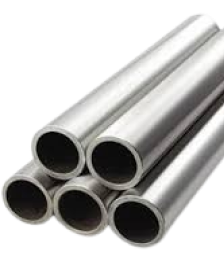
Incoloy 800 is manufactured in a comprehensive range of seamless tubes, welded tubes, boiler tubes, heat exchanger tubes, condenser tubes, instrumentation tubes, hydraulic tubes, U-bend tubes, and custom-fabricated lengths. Products are available in a comprehensive range of diameters, wall thicknesses, surface finishes, and internationally recognised specifications, enabling their selection for a broad spectrum of engineering applications and industrial operating environments.
Although all three alloys are designed for elevated-temperature service, their performance characteristics differ significantly. Incoloy 800 offers excellent resistance to oxidation, carburisation, and creep while maintaining superior dimensional stability during prolonged thermal exposure. Inconel 600 is generally selected for more aggressive corrosive environments, whereas Stainless Steel 310 is commonly used where oxidation resistance is required but nickel alloy performance is not essential. Material selection should always reflect the process environment, operating temperature, and anticipated service life.
Material selection should be based upon operating temperature, internal pressure, thermal cycling, process atmosphere, corrosion mechanism, fabrication requirements, applicable ASTM and ASME specifications, design life, and inspection requirements. Evaluating these engineering parameters helps ensure optimum material performance, regulatory compliance, and long-term operational reliability.
Unlike many conventional alloys, Incoloy 800 maintains its microstructural stability during prolonged exposure to elevated temperatures. This characteristic reduces distortion, limits creep deformation, preserves mechanical properties, and contributes to the reliable operation of critical equipment subjected to continuous thermal loading.
Incoloy 800 Tubes are commonly manufactured in accordance with ASTM B407, ASTM B514, ASTM B829, ASME SB407, ASME SB514, and ASME SB829 specifications. Compliance with these internationally recognised standards verifies dimensional accuracy, material consistency, mechanical integrity, and suitability for critical industrial applications.
Quality verification typically includes Positive Material Identification (PMI), Hydrostatic Pressure Testing, Ultrasonic Testing (UT), Eddy Current Testing (ECT), dimensional inspection, chemical analysis, mechanical property evaluation, visual examination, and complete material traceability supported by Mill Test Certificates (EN 10204 3.1). These inspection procedures confirm compliance with engineering specifications before installation.
EPC contractors frequently specify Incoloy 800 Tubes because they provide predictable high-temperature performance, excellent fabrication characteristics, reliable weldability, and extended operational life. Their ability to minimise maintenance requirements and maintain mechanical integrity under demanding process conditions supports improved plant availability and reduced lifecycle costs.
A reliable supplier demonstrates proven expertise in nickel alloy products, maintains compliance with internationally recognised ASTM and ASME standards, provides comprehensive inspection documentation and material traceability, offers technical guidance on alloy selection, and ensures dependable inventory availability with project-focused delivery schedules. These capabilities help reduce procurement risk and support successful execution of critical industrial projects.

Our Location
Flat no 5, Swapna HSG Soc
Ltd., Charkop, Kandivali West,
Mumbai, Maharashtra, India.
400067


