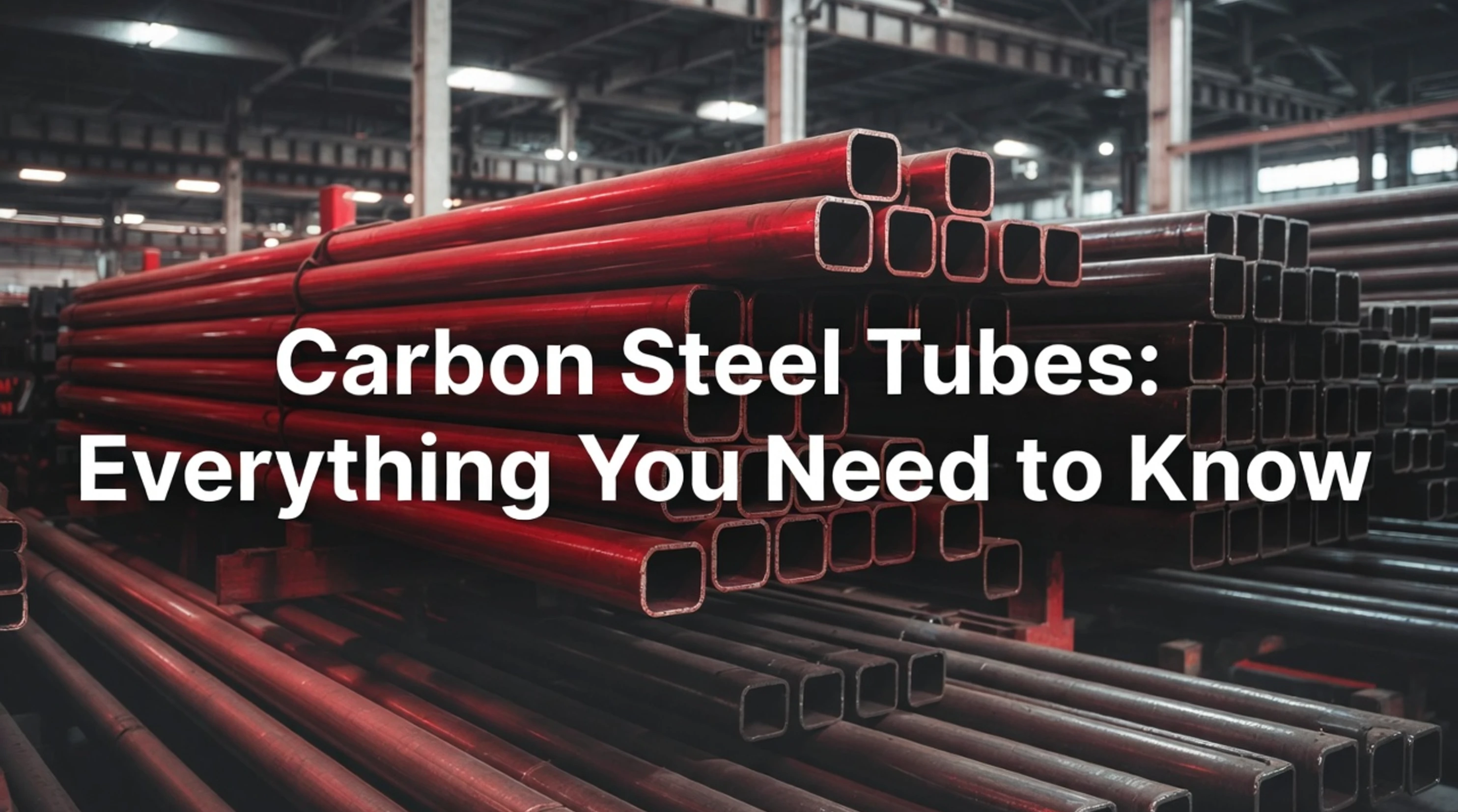
Carbon steel tubes quietly power some of the world’s most demanding industries—from oil refineries and power plants to pipelines and heavy engineering projects. Yet, many buyers and engineers still ask fundamental questions: What are carbon steel tubes? How are they different from pipes? Which type is best for high-pressure applications?
This guide answers all of that—clearly, practically, and without technical overload.
What Are Carbon Steel Tubes?
Carbon steel tubes are hollow steel products manufactured with a controlled carbon content to deliver strength, durability, and pressure resistance. Unlike decorative or light-duty tubing, these tubes are engineered for structural, mechanical, and industrial use.
They are widely chosen because they offer:
This is why carbon steel tubes are a preferred choice across critical infrastructure projects.
Carbon Steel Tubes vs Pipes: What’s the Difference?
Carbon steel tubes vs pipes mainly differ in how they are measured and used:
Tubes are used where precision, strength, and engineering tolerance matter—such as mechanical systems, boilers, and pressure equipment.
Types of Carbon Steel Tubes Explained
Seamless Carbon Steel Tubes
Manufactured without a welded joint, seamless carbon steel tubes offer uniform strength throughout the tube body.
Best for:
Common standards include ASTM A106 carbon steel tubes, widely used in refineries and thermal plants.
Which carbon steel tubes are best for high pressure applications?
Seamless carbon steel tubes are the top choice due to their superior pressure resistance.
Welded Carbon Steel Tubes
These tubes are formed by rolling steel and welding the seam.
Includes:
Best for:
A popular specification here is ASTM A53 carbon steel tubes, suitable for both structural and fluid transport purposes.
Precision, Wall Thickness & Shape Options
Precision & Strength Variants
Wall Thickness
Shapes Available
Standards Engineers Commonly Specify
Depending on geography and application, buyers often request:
These standards ensure consistency in chemical composition, mechanical properties, and safety performance.
Uses of Carbon Steel Tubes Across Industries
Oil & Gas
Pipelines
Power Plants
Their versatility makes them one of the most widely used steel products globally.
Carbon Steel Tubes Price: What Influences Cost?
Buyers frequently compare:
Pricing depends on:
Seamless and thick-wall tubes generally command a higher price due to their performance benefits.
Choosing the Right Carbon Steel Tubes Supplier
A reliable carbon steel tubes supplier should offer:
For Middle East projects, many EPC contractors specifically search for a carbon steel tubes supplier UAE to meet regional standards and delivery timelines.
Key Takeaway:
Carbon steel tubes may look simple, but choosing the wrong type can lead to performance issues, safety risks, and higher lifecycle costs. Understanding:
Which helps engineers, buyers, and project managers make confident decisions.
Make an Informed Choice
Carbon steel tubes remain the backbone of industrial infrastructure because they strike the perfect balance between strength, versatility, and affordability. When specified correctly and sourced from a trusted supplier like KVN Steels, they deliver decades of reliable performance.

Our Location
Flat no 5, Swapna HSG Soc
Ltd., Charkop, Kandivali West,
Mumbai, Maharashtra, India.
400067