Specification :
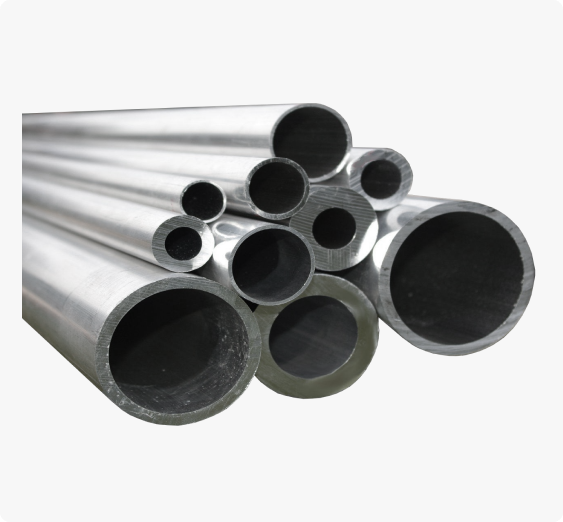
Manufactured to ASTM B210, ASTM B241, ASTM B234, and ASME aluminium alloy piping standards.


Specification :
Manufactured to ASTM B210, ASTM B241, ASTM B234, and ASME aluminium alloy piping standards.
Material Grades :
Available in 6061, 6063, 6082, 5083, 5052, and other industrial aluminium alloy grades.
Manufacturing Process :
Produced through seamless extrusion technology for enhanced strength and leak-free performance.
Size Range :
Offered in multiple diameters and wall thicknesses for industrial, marine, and structural applications.


As a trusted Aluminium Alloy Seamless Pipes Supplier, we provide high-performance piping solutions engineered for industries that demand strength, corrosion resistance, and weight efficiency. Manufactured through seamless extrusion processes, aluminium alloy pipes deliver superior structural integrity without welded joints, making them an ideal choice for aerospace, marine, hydraulic, transportation, and industrial engineering applications.
Combining excellent mechanical properties with outstanding corrosion resistance, aluminium seamless pipes offer a reliable solution for environments where durability and reduced weight are equally important. Their versatility makes them suitable for both high-performance engineering systems and general industrial infrastructure.
Why Choose Aluminium Alloy Seamless Pipes?
Unlike conventional piping materials, aluminium alloy seamless pipes provide an exceptional balance between strength and lightweight performance. Their seamless construction enhances pressure handling capability while minimizing the risk of leakage in critical systems.
Key advantages include:
These benefits make aluminium alloy pipes a preferred choice across multiple industries worldwide.
Available Aluminium Alloy Grades
We supply a comprehensive range of aluminium seamless piping products, including:
6061 Aluminium Seamless Pipes
Widely used for structural and engineering applications, 6061 aluminium provides excellent strength, machinability, and corrosion resistance.
ASTM B241 Aluminium Seamless Pipes
Manufactured according to internationally recognized standards, ASTM B241 pipes ensure dimensional accuracy and reliable industrial performance.
Applications Across Diverse Industries
Aerospace Engineering
Aluminium Seamless Pipes for Aerospace Applications are extensively used because of their exceptional strength-to-weight ratio. The reduced weight contributes to improved efficiency while maintaining structural reliability.
Hydraulic Systems
Aluminium Alloy Hydraulic Seamless Pipes provide dependable fluid transfer performance and pressure resistance, making them suitable for hydraulic machinery and industrial equipment.
Transportation and Infrastructure
Lightweight aluminium piping systems help reduce overall structural weight while maintaining the required mechanical strength for transportation and construction projects.
Performance Characteristics
One of the most significant advantages of aluminium alloys is their ability to deliver high performance without excessive weight.
Why are aluminium seamless pipes preferred in engineering projects?
Because they offer:
These qualities contribute to lower lifecycle costs and improved operational efficiency.
As a leading Lightweight Aluminium Seamless Pipes Supplier, we deliver premium-quality piping solutions designed for performance, durability, and efficiency. Whether you require 6061 Aluminium Seamless Pipes, 6082 Aluminium Alloy Seamless Tubes, ASTM B241 Aluminium Seamless Pipes, or High Strength Aluminium Alloy Seamless Pipes, our products provide the ideal combination of lightweight construction, corrosion resistance, and long-term industrial reliability. For modern engineering applications where strength and weight matter, aluminium alloy seamless pipes remain a smart and dependable choice.
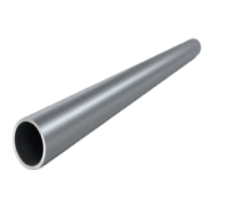
Aluminium Alloy Hydraulic Pipes
Precision-engineered pipes designed for hydraulic systems requiring lightweight construction, pressure reliability, and corrosion resistance.
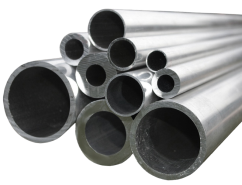
Aluminium Alloy Aerospace Pipes
High-performance seamless pipes developed for aerospace structures, fuel systems, and weight-sensitive engineering applications.
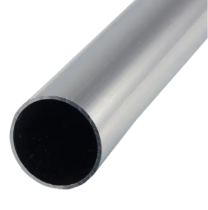
Aluminium Alloy Marine Grade Pipes
Corrosion-resistant aluminium pipes suitable for shipbuilding, offshore platforms, and coastal industrial environments.
Aluminium Alloy Heat Exchanger Pipes
Thermally efficient seamless pipes engineered for condensers, cooling systems, and industrial heat transfer applications.
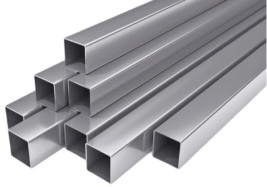
Aluminium Alloy Structural Pipes
Lightweight yet durable pipes widely used in construction, transportation, and industrial framework fabrication projects.
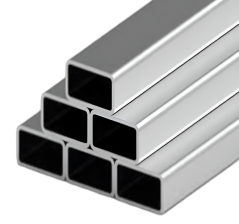
Aluminium Alloy High-Pressure Pipes
Seamless aluminium alloy pipes manufactured for fluid transfer systems operating under elevated pressure and demanding service conditions.
Specification :
Manufactured to ASTM B210, ASTM B241, ASTM B234, and ASME aluminium alloy piping standards.
Material Grades :
Available in 6061, 6063, 6082, 5083, 5052, and other industrial aluminium alloy grades.
Manufacturing Process :
Produced through seamless extrusion technology for enhanced strength and leak-free performance.
Size Range :
Offered in multiple diameters and wall thicknesses for industrial, marine, and structural applications.
Weight Advantage :
Lightweight construction reduces installation load while maintaining excellent mechanical strength.
Corrosion Resistance :
Provides superior protection against atmospheric, marine, and industrial corrosion environments.
Thermal Conductivity :
Excellent heat transfer properties suitable for cooling systems and heat exchange applications.
Applications :
Widely used in aerospace, marine, transportation, hydraulic systems, heat exchangers, and structural engineering projects.
Details for Aluminium Alloy Pipes & Tubes
| Alloy & Temper | Size in mm | Application |
|---|---|---|
| 7075t6 | 14*0.8 / 16*0.7 / 18*0.7 | Ski pole / tracking pole |
| 7075t6 | 7*0.3 / 9*0.4 | Arrow tubes |
| 2014t6, 7075t6, 7075t76 | 22*2.5 / 30*4.8 | Handle bar |
| aa3003, 6063, 6061 | 16*1.2 / 12*1.75 / 16*1.75 / 12*2 / 7.94*1 / 9.52*1 / 12.7*1.2 / 16*2 | Automobile radiator connector |
| 5046-h111 | Condenser & heat exchanger | |
| d97, 1015 | Automobile heat sink & radiator tubes | |
| 7001t6 | 8.5*0.7 / 9.5*0.7 / 11*0.7 / 7*1.2 | Tent pole |
| aa7045, 7050, 6061 | 60.3*2.29(7046) 60.3*2.16(7050) 50.8*2.16(6061) | Bat tubes |
| aa6061, 7005 | 26*18*1.6 / 36*18*1.4 / 65*25*2 / 64*42*1.8 | Bike tubes rectangular |
| 7075t6, 7050t7351 | 30.5*24.8 / 31.7*22.2 | Bike shock absorbers |
| 3003h16 | 40*0.8/40*0.9/25*0.9/30*0.9/120*0.9 /164*10/140*160 | Copy drum |
| 7075t6 | Aircraft & rail seat components |
Our Aluminium Alloy Seamless Pipes Supplier are used in a wide range of applications and various industries. Below are a few of them:

Application Industries

Aerospace Industry

Food Processing Industry

Pulp & Paper Indusry

Energy Industry

Pharmaceuticals Industry

Power Plant Industry

Chemical Industry

Oil and Gas Industry
Get clear answers to common queries about our steel products, services, and delivery processes.

Seamless aluminium pipes are widely selected where low weight, excellent corrosion resistance, and dependable mechanical performance are essential. Their weld-free construction provides uniform structural integrity throughout the pipe wall, making them suitable for hydraulic systems, marine engineering, aerospace components, heat exchangers, and precision industrial applications operating under demanding service conditions.
These products are extensively specified across the aerospace, marine, automotive, defence, chemical processing, HVAC, power generation, cryogenic engineering, and construction sectors. Their excellent strength-to-weight ratio, corrosion resistance, and ease of fabrication make them suitable for structural, fluid transfer, and heat exchange applications.
Both products serve important industrial applications, but their manufacturing methods differ significantly. Seamless pipes are produced without a longitudinal weld, providing uniform mechanical properties that are advantageous for pressure-sensitive and precision-engineered systems. Welded pipes are often selected for larger diameters and applications where cost efficiency and fabrication flexibility are primary considerations.
The appropriate alloy should be selected through a comprehensive engineering assessment that considers operating pressure, service temperature, corrosion environment, material grade, dimensional requirements, fabrication processes, and applicable engineering standards. Evaluating these technical parameters ensures the selected product satisfies both performance expectations and long-term operational requirements.
Common grades include 6061, 6063, 6082, 5083, 5052, 7075, and 2024, each offering distinct combinations of strength, corrosion resistance, weldability, machinability, and fatigue performance. The most suitable grade depends upon the operating environment and the mechanical demands of the intended application.
These products are commonly manufactured in accordance with ASTM B210, ASTM B241, ASTM B429, ASTM B483, ASME SB210, and ASME SB241, depending on the alloy grade and intended service. Compliance with these internationally recognised standards helps ensure dimensional accuracy, mechanical integrity, material consistency, and dependable industrial performance.
Quality assurance typically includes chemical composition analysis, tensile testing, hardness testing, dimensional verification, ultrasonic testing (UT), hydrostatic or pneumatic pressure testing where applicable, visual inspection, and complete material traceability supported by Mill Test Certificates (EN 10204 3.1). These procedures verify conformity with project specifications before delivery.
Yes. Pipes can be supplied in customised outside diameters, wall thicknesses, cut lengths, tempers, surface finishes, and machining tolerances to satisfy project-specific engineering requirements. Custom processing helps reduce fabrication time, minimise material waste, and improve installation efficiency.
Industrial buyers should expect comprehensive quality documentation, including Mill Test Certificates (EN 10204 3.1), chemical composition reports, mechanical property test results, dimensional inspection records, and complete material traceability. These documents verify product conformity with the specified standards and support quality assurance throughout the procurement process. Additional third-party inspection reports may also be provided when required by project specifications.
A reliable supplier should demonstrate compliance with internationally recognised ASTM and ASME standards, maintain comprehensive quality assurance procedures, provide complete inspection documentation and material traceability, offer technical support for alloy selection, and ensure dependable delivery schedules. Evaluating these factors helps minimise procurement risk and supports the successful execution of industrial projects.

Our Location
Flat no 5, Swapna HSG Soc
Ltd., Charkop, Kandivali West,
Mumbai, Maharashtra, India.
400067


