Specification :
ASTM B619, ASTM B622, ASTM B626, ASME SB619, ASME SB622, ASME SB626.


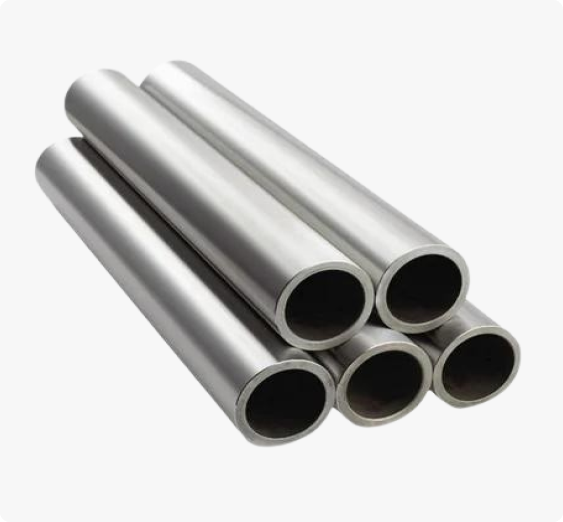
Specification :
ASTM B619, ASTM B622, ASTM B626, ASME SB619, ASME SB622, ASME SB626.
Grade :
Hastelloy C22 (UNS N06022) and Hastelloy C276 (UNS N10276).
Pipe Forms :
Seamless, Welded, ERW, Heat Exchanger, Instrumentation, and Process Pipes.
Corrosion Resistance :
Exceptional protection against chlorides, acids, oxidizers, and reducing chemicals.


When industrial systems operate in highly corrosive, chemically aggressive, or elevated-temperature environments, material selection becomes critical to long-term reliability. As a trusted Hastelloy C22/C276 Pipes and Tubes Supplier, we provide premium nickel-molybdenum-chromium alloy piping solutions engineered to perform where conventional stainless steel and alloy materials may fail.
Manufactured according to international standards, UNS N06022 and N10276 Pipes and Tubes offer exceptional resistance to oxidizing and reducing chemicals, chlorides, acids, and seawater exposure. These advanced alloys are widely used in chemical processing plants, offshore platforms, pharmaceutical facilities, pollution control systems, and petrochemical industries.
Why Choose Hastelloy C22/C276 Pipes and Tubes?
Hastelloy C22 and Hastelloy C276 are among the most versatile corrosion-resistant nickel alloys available today. Their unique metallurgical composition delivers superior protection against pitting, crevice corrosion, stress corrosion cracking, and localized chemical attack.
Key benefits include:
These properties make Hastelloy C22/C276 High Temperature Alloy Pipes a preferred solution for critical industrial applications.
Available Product Range
We offer a comprehensive range of Hastelloy piping products, including:
Each product undergoes strict quality inspection to ensure dimensional accuracy, material integrity, and compliance with international engineering standards.
Superior Corrosion Protection
One of the primary reasons industries select Hastelloy alloys is their ability to withstand highly aggressive chemical environments.
What makes Hastelloy C22 and C276 corrosion resistant?
The combination of nickel, molybdenum, and chromium provides exceptional resistance against:
Ideal for Chemical Processing Industries
Hastelloy C22/C276 Chemical Process Pipes are widely used in:
Their ability to maintain structural integrity under severe chemical exposure makes them one of the most reliable alloy piping solutions available.
Offshore and Marine Applications
Are Hastelloy C276 pipes suitable for offshore environments?
Yes. Hastelloy C276 Pipes for Offshore and Marine Applications provide excellent resistance to seawater corrosion, salt-laden atmospheres, and harsh environmental conditions.
These pipes are commonly installed in:
Their durability helps ensure dependable performance in challenging marine environments.
High-Temperature Performance
In addition to corrosion protection, Hastelloy alloys maintain excellent mechanical properties at elevated temperatures.
This makes them suitable for:
Their thermal stability contributes to safe and efficient long-term operation.
As a reliable Hastelloy C22/C276 Pipes and Tubes Supplier, we deliver high-performance nickel alloy piping solutions designed for the world's most demanding industrial environments. Combining exceptional corrosion resistance, high-temperature stability, and long-term durability, Hastelloy C22 and C276 remain the preferred choice for critical process systems, offshore infrastructure, and advanced chemical processing applications.
| STANDARD | UNS | WNR. | EN | JIS | GOST | OR |
|---|---|---|---|---|---|---|
| Hastelloy C22 | N06022 | 2.4602 | NiCr21Mo14W | NW 6022 | - | - |
| Hastelloy C276 | N10276 | 2.4819 | NiMo16Cr15W | NW 0276 | ХН65МВУ | ЭП760 |
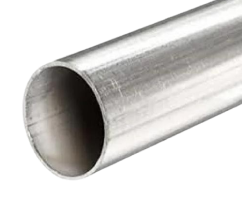
Hastelloy C22 Seamless Pipes
High-purity seamless pipes engineered for aggressive chemical processing, acid handling systems, and corrosion-critical industrial applications.
Hastelloy C276 Welded Pipes
Durable welded pipes offering exceptional resistance to chlorides, oxidizing chemicals, and harsh refinery operating environments.
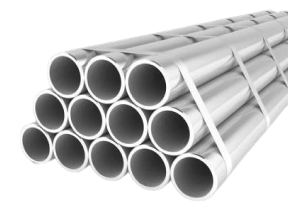
Hastelloy C22 Heat Exchanger Tubes
Precision tubes designed for heat exchangers, condensers, and thermal systems requiring superior corrosion resistance and heat transfer efficiency.
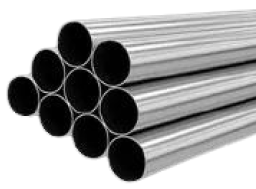
Hastelloy C276 Chemical Process Tubes
Advanced alloy tubes developed for chemical plants, pollution control systems, and highly corrosive process media applications.
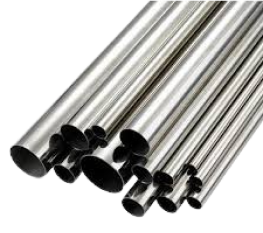
Hastelloy C22 Offshore Service Pipes
Corrosion-resistant pipes suitable for offshore platforms, marine engineering, and seawater-exposed industrial infrastructure.
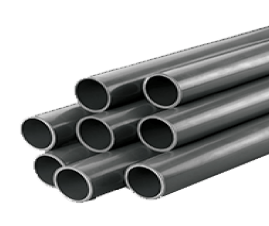
Hastelloy C276 High-Performance Instrumentation Tubes
Precision instrumentation tubing engineered for process control, analytical systems, and critical fluid transfer applications in demanding environments.
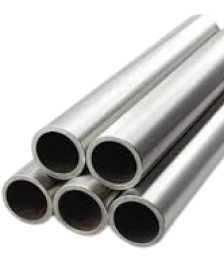
Specification :
ASTM B619, ASTM B622, ASTM B626, ASME SB619, ASME SB622, ASME SB626.
Grade :
Hastelloy C22 (UNS N06022) and Hastelloy C276 (UNS N10276).
Pipe Forms :
Seamless, Welded, ERW, Heat Exchanger, Instrumentation, and Process Pipes.
Corrosion Resistance :
Exceptional protection against chlorides, acids, oxidizers, and reducing chemicals.
Temperature Capability :
Suitable for elevated-temperature and highly corrosive process environments.
Pressure Performance :
Designed for critical fluid handling and high-pressure industrial systems.
Industrial Applications :
Chemical processing, pollution control, offshore, pharmaceutical, and petrochemical sectors.
Quality Testing :
PMI, Hydrostatic, Ultrasonic, Eddy Current, Mechanical Testing, and EN 10204 3.1 Certification.
Chemical Composition of Hastelloy C22/C276 Seamless and Welded Pipes / Tubes
| Grade | Ni | C | Mo | Mn | Si | Fe | P | S | Co | Cr | W | V |
|---|---|---|---|---|---|---|---|---|---|---|---|---|
| Hastelloy C22 | Balance | 0.010 max | 12.5-14.5 | 0.50 max | 0.08 max | 2-6 | 0.02 max | 0.02 max | 2.5 max | 20-22.5 | 2.5-3.5 | 0.35 max |
| Hastelloy C276 | Balance | 0.01 max | 15–17 | 1.0 max | 0.08 max | 4–7 | 0.04 max | 0.03 max | 2.5 max | 14.5–16.5 | 3–4.5 | 0.35 max |
Mechanical Properties Of Hastelloy C22/C276 Pipes and Tubes
| Grade | Density | Melting Point | Tensile Strength | Yield Strength (0.2%Offset) | Elongation |
|---|---|---|---|---|---|
| Hastelloy C22 | 8.69 g/cm3 | 1399 °C (2550 °F) | Psi – 1,00,000, MPa – 690 | Psi – 45000, MPa – 310 | 45 % |
| Hastelloy C276 | 8.89 g/cm3 | 1370 °C (2500 °F) | Psi – 1,15,000 , MPa – 790 | Psi – 52,000 , MPa – 355 | 40 % |
Physical Properties of Hastelloy C22 Pipes And Tubes
| Density | 0.314 lb/in3 |
|---|---|
| Specific Gravity | 8.69 lb/in3 |
| Specific Heat (Btu/lb/Deg F - [32-212 Deg F] | 0.1 |
| Melting Point (Deg F) | 2550 |
| Thermal Conductivity | 70 |
| Mean Coeff Thermal Expansion | 6.9 |
| Modulus of Elasticity Tension | 29.9 |
Our Hastelloy C22/C276 Pipes and Tubes Supplier are used in a wide range of applications and various industries. Below are a few of them:

Application Industries

Aerospace Industry

Food Processing Industry

Pulp & Paper Indusry

Energy Industry

Pharmaceuticals Industry

Power Plant Industry

Chemical Industry

Oil and Gas Industry
Get clear answers to common queries about our steel products, services, and delivery processes.

They are widely used in chemical processing, offshore engineering, pharmaceuticals, pollution control systems, marine applications, and high-temperature industrial operations.
Selecting between Hastelloy C22 and Hastelloy C276 requires a detailed assessment of process chemistry, operating temperatures, contaminant exposure, and long-term corrosion risks. Hastelloy C22 is particularly valued in environments containing highly oxidizing chemicals and complex mixed-acid systems, whereas Hastelloy C276 is renowned for its exceptional versatility and proven performance across a wide spectrum of aggressive industrial media, including chlorides, acids, and reducing process conditions. The final selection should align with the application's corrosion profile, reliability objectives, and lifecycle performance requirements.
They provide superior corrosion protection, pressure reliability, and long-term performance in aggressive industrial environments.
Yes. Their corrosion resistance and thermal stability make them highly effective for heat exchanger and process equipment applications.

Our Location
Flat no 5, Swapna HSG Soc
Ltd., Charkop, Kandivali West,
Mumbai, Maharashtra, India.
400067


